
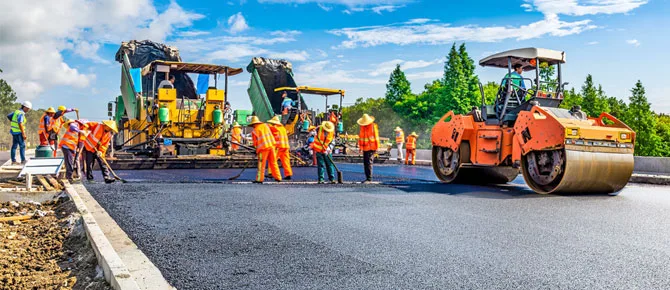
Paving India’s Destiny: The High-Octane Road Construction Surge
India’s road sector is entering a phase where the question is no longer how much it can build—but how intelligently it can execute. For over a decade, growth was defined by expansion: more highways, faster awards, higher daily construction. That phase delivered scale. What lies ahead is more complex. As projects deepen and timelines tighten, the focus is shifting from OUTPUT to OUTCOMES—where speed, cost efficiency, quality, and lifecycle performance must converge. This is reshaping the economics of road construction. Equipment is becoming intelligent, execution more data-driven, and delivery increasingly real-time, even as margin pressures and sustainability mandates intensify. The result is a structural transition—from building roads at scale to engineering infrastructure systems that can perform and endure. This cover story examines how India’s road construction ecosystem is moving beyond scale toward intelligence—redefining execution, equipment, and economics in real time ……. writes, PRERNA SHARMA.
India’s infrastructure push is entering a phase where scale alone is no longer enough—performance is. At a time when supply chains are being reconfigured and economic activity is dispersing beyond traditional hubs, the ability to move goods quickly and reliably is becoming a defining competitive advantage. Roads sit at the center of that shift—not merely as connectors, but as instruments of economic efficiency. This is why road construction is no longer a linear story of public expenditure. It is a strategic lever. The scale of that lever is unmistakable. India’s road construction market, estimated at around USD 156–160 billion in 2025, is projected to expand to over USD 350–360 billion by 2034, growing at a CAGR of roughly 9–10%, according to IMARC estimates. This positions roads as one of the largest and fastest-growing components of the country’s infrastructure ecosystem. But the real story lies beyond growth.
From Expansion to Execution Discipline
India has already demonstrated its ability to build at scale. Highway construction peaked at over 35–37 km per day in recent years, reflecting the intensity of policy push and capital deployment. The current phase, however, is defined by a different challenge—execution discipline. As per ICRA, the roads sector is expected to see moderate growth of 3–5% in the near term (through FY2027) after a relatively subdued FY2026, as delays in project awards and execution cycles weigh on momentum. This marks a clear shift: the constraint is no longer intent or funding, but the ability to execute efficiently within tighter timelines and cost frameworks.
At the same time, margin pressures are intensifying. Rising input costs—particularly steel, bitumen, and fuel—combined with competitive bidding are compressing profitability across contractors. ICRA flags that operating margins will remain under pressure in the near term, highlighting the growing importance of cost control and productivity. In this environment, infrastructure is no longer measured by how much is built, but by how efficiently it is delivered.
Short-Term Moderation, Structural Reset
Despite strong structural drivers, the industry is currently navigating a phase of moderation—but this is less a slowdown and more a reset. ICRA’s projection of 3–5% near-term growth through FY2027, following a subdued FY2026, reflects a convergence of factors: delayed project awards, execution bottlenecks, extended monsoons, and the transition to stricter emission norms. At the same time, input cost volatility—particularly in steel, bitumen, and fuel—is compressing margins across contractors.
But beneath these pressures lies a more fundamental shift. The industry is moving from a volume-led expansion cycle to an efficiency-led execution model. Capital is no longer scarce—execution capability is. In this environment, even temporary moderation is forcing a recalibration: tighter cost control, better asset utilization, and greater reliance on technology to sustain margins.
Crucially, the long-term demand story remains intact. India’s infrastructure pipeline—spanning highways, economic corridors, and rural connectivity—is both deep and diversified. Unlike mature markets driven by replacement demand, India continues to operate in a greenfield expansion cycle, ensuring sustained equipment demand over the medium to long term. The implication is clear: this is not a demand slowdown—it is a transition toward a more disciplined, performance-driven industry structure.
Equipment Demand Mirrors the Shift
This shift toward execution efficiency is directly reshaping demand for construction equipment. India’s construction equipment market, estimated at USD 15–16 billion in 2025, is expected to grow at a CAGR of 7–8% over the next decade, reflecting sustained infrastructure activity but also a transition toward higher-value, technology-driven machinery. Globally, the broader construction equipment market is projected to reach approximately USD 350 billion by 2034, growing at a more moderate pace of around 3–4% CAGR, according to Research & Markets. India, therefore, stands out as a high-growth outlier within a relatively mature global landscape. Within India, demand is no longer driven purely by volume. It is being shaped by faster project timelines; higher quality standards; and greater scrutiny on lifecycle costs. This is pushing contractors toward more advanced equipment—particularly in road construction segments such as asphalt pavers, compactors, and batching plants.
This shift toward productivity and lifecycle efficiency is already playing out on the ground. In road projects across hilly and remote regions, contractors are rethinking one of the most persistent inefficiencies in execution—material logistics. Instead of sourcing aggregates from crushing plants located 25–30 km away, they are increasingly deploying excavator-mounted crusher attachments such as the MB Crusher BF90.3 to process material directly at site.
The impact is immediate and multi-layered. By eliminating long-haul transportation, contractors are reducing diesel consumption, minimizing equipment dependency, and avoiding cost volatility—where aggregate prices have reached as high as `1,400 per cubic meter, excluding transport risks. More importantly, it ensures continuity in execution, removing a key source of delay in terrain-constrained environments.
What makes this model particularly effective is its impact on asset productivity. Excavators—across platforms from manufacturers such as Caterpillar, Komatsu, and Kobelco—are no longer limited to digging operations, but are performing dual roles, handling both excavation and material processing. This not only improves utilization but also aligns with the broader shift toward maximizing output per machine rather than expanding fleet size.
In effect, this is not just a workaround—it is a structural shift in how projects are executed. By decentralizing material production and embedding efficiency at the site level, contractors are gaining tighter control over cost, timelines, and resource deployment. As road development moves deeper into challenging geographies, such equipment-led innovations are becoming critical to sustaining both execution speed and economic viability.
From Machines to Productivity Systems
The role of equipment is undergoing a fundamental shift. Traditionally viewed as support tools, machines are now central to project execution strategy. The focus is moving from ownership to output—how much work a machine can deliver, how consistently it performs, and how efficiently it operates over time. Technology is accelerating this transition. Telematics-enabled equipment is allowing real-time tracking of fuel consumption, utilization rates, and machine health. Predictive maintenance is reducing downtime, while automation is improving precision in paving and compaction processes. The implication is clear: construction is becoming data-driven. This is particularly critical in a market like India, where even marginal gains in productivity can significantly impact project economics. With margins under pressure, the ability to extract higher efficiency from equipment is becoming a key differentiator.
Quality control itself is becoming real-time, system-driven, and deeply embedded within execution—mirroring the broader shift from activity-led construction to performance-led infrastructure delivery. The Ministry of Road Transport and Highways (MoRTH) has introduced Mobile Quality Control Vans (MQCVs), effectively transforming quality assurance into a continuous, on-site process rather than a post-construction checkpoint.
These vans function as fully equipped mobile laboratories, capable of conducting non-destructive testing of concrete strength, pavement density, and sub-base integrity using advanced tools such as ultrasonic pulse velocity meters, rebound hammers, asphalt density gauges, and deflectometers. The ability to validate structural parameters in real time significantly reduces the risk of latent defects, rework, and lifecycle inefficiencies.
More critically, this is not just about better testing—it is about better systems. The data generated is integrated into a centralized monitoring architecture, supported by a National Highway Quality Monitoring Portal and GPS-enabled tracking. This creates visibility across projects, enabling field teams and authorities to identify deviations early, trigger corrective action, and maintain consistency in execution standards across geographies.
In effect, quality is no longer something that is audited into infrastructure after completion—it is engineered into the construction process itself. This aligns directly with the sector’s larger transition toward data-driven execution, where performance is continuously measured, validated, and optimized. As infrastructure scales, such system-level interventions will be critical in ensuring that speed does not come at the cost of durability or accountability.
The Shift to Intelligent Road-Building Systems
The evolution of road construction is increasingly being shaped by a new generation of equipment—machines that combine mechanical strength with digital intelligence, fuel efficiency, and operator-centric design. Across categories, OEMs are embedding real-time monitoring, automation, and precision controls to meet the rising demand for faster, more efficient, and more sustainable execution.
Recent launches such as the SANY SSR110C-10 PRO vibratory soil compactor reflect this shift toward performance-driven machinery. Built for demanding site conditions, the 11.2-tonne machine integrates dual-frequency vibration, a 132 HP fuel-efficient engine, and a high static linear load of 295 N/cm to deliver deeper and more uniform compaction. What sets it apart is the integration of intelligence into core functionality. Features such as an optional compaction meter provide real-time soil density feedback, enabling operators to avoid over- or under-compaction—directly improving quality and reducing rework. Telematics integration through MachineLink+ and centralized touchscreen controls further enhance monitoring, uptime, and operational efficiency.

As Pradeep Shrivastava, Head – Road Business, SANY India, notes: “As we move forward towards Viksit Bharat, infrastructure must be supported by machines designed for precision, efficiency, and sustainability. The SSR110C-10 PRO reflects our focus on engineering solutions that empower both operators and project outcomes.”
This focus extends beyond a single product to a broader compaction portfolio, where SANY is refining vibration and control systems across single drum, tandem, and pneumatic tyre rollers. These advancements are aimed at delivering jerk-free operation and consistent compaction output, reducing operator dependency and ensuring uniform density across road layers—critical in preventing premature failures such as cracking and rutting. The machines are also being designed for extended operational reliability, with enhanced hydraulic systems and optimized power delivery improving fuel efficiency and service life. Importantly, they are increasingly being built with readiness for digital integration and future electrification—reflecting a shift toward connected, performance-driven compaction solutions aligned with evolving construction practices.
In parallel, global OEMs are redefining core equipment platforms through electronics and fuel optimization. The Cat 322 excavator, for instance, is positioned as a high-efficiency solution for both road and quarry applications—two segments that are increasingly interlinked.

According to Nicole Li, Vice President Sales & Marketing, Global Construction and Infrastructure, Caterpillar, and Gurman Reen, Director Sales- India, Customer Solutions Division, Caterpillar, the machine combines electronic engines with electro-hydraulic controls—delivering one of the lowest fuel consumption

levels in its class without compromising on power or performance. Real-time fuel monitoring via mobile integration and multiple configuration options further enhance adaptability across diverse project requirements. The broader demand outlook remains closely tied to infrastructure expansion. As Reen points out, road development continues to drive demand not just for construction equipment, but also for quarrying, material handling, and allied machinery—highlighting the cascading impact of infrastructure investment across the equipment ecosystem.
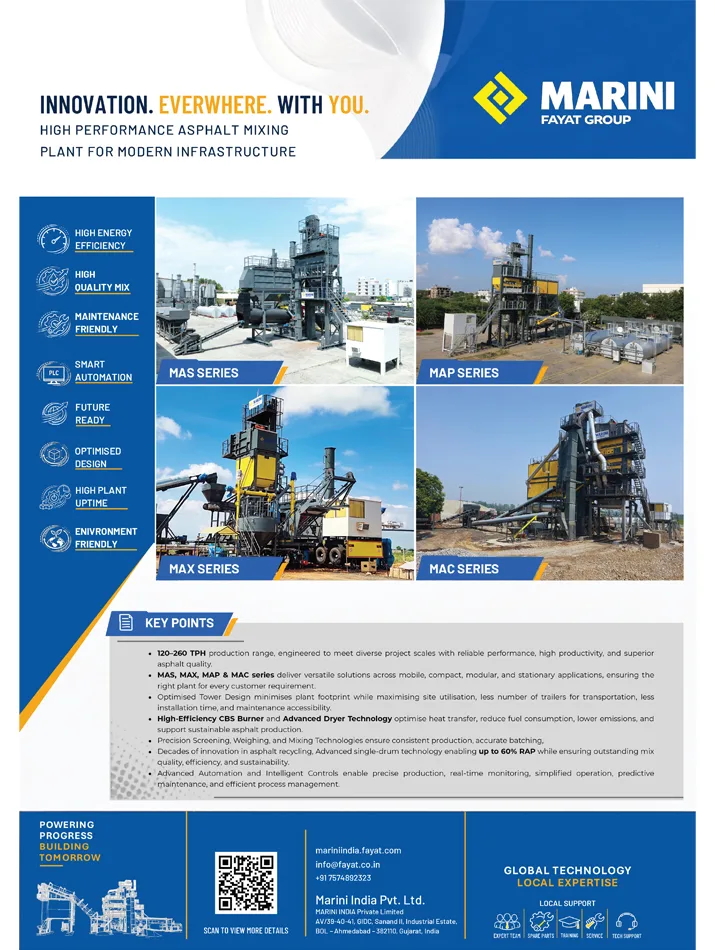
Beyond individual machines, the next frontier lies in connected ecosystems. The Fayat Group, through brands such as Dynapac, BOMAG, and Marini, is advancing a portfolio centered on intelligent compaction, connected paving, and energy-efficient asphalt production. Digital platforms such as Dyn@Link and Dyn@Lyzer leverage AI-driven analytics, cloud connectivity, and predictive maintenance to enable real-time performance monitoring and benchmarking. From precision milling and compaction to optimized asphalt mix control, the focus is on delivering consistent quality while minimizing downtime and resource consumption.

As Vishwesh Rai, General Manager – Sales India, Fayat Road Equipment, highlights, the industry is witnessing a dual demand curve—high-capacity precision equipment for large infrastructure projects alongside compact, efficient machines for rural roads and urban development. This is driving the need for versatile, digital-first solutions that can adapt across project scales. This transformation is also being reinforced by a broader spectrum of equipment innovation—spanning compact urban machines, high-capacity excavators, and electrified platforms—each addressing a distinct layer of infrastructure demand and execution complexity.
In urban and space-constrained environments, machines such as the Kubota U22-3 are enabling precision-led execution. Designed with a true zero tail swing configuration, the machine allows operators to work safely along walls and in narrow corridors without rear overhang risk—an increasingly critical requirement in dense urban roadworks and utility projects. Despite its compact footprint, it delivers a digging depth of over 2.3 meters and a working reach exceeding 4 meters, striking a balance between maneuverability and capability. Combined with responsive hydraulics and ergonomic controls, such equipment is redefining productivity in constrained job sites where access, accuracy, and safety intersect.
JCB’s equipment strategy spans both high-capacity earthmoving and core compaction processes. At the heavy end, the JCB 52-ton excavator—one of the largest in its India portfolio—is engineered for bulk excavation in large highway and infrastructure projects. With bucket capacities of up to ~3.4 cubic meters and powerful hydraulic systems, it enables faster cycle times and higher material movement, supporting compressed project timelines. At the same time, platforms such as the JCB VM116 soil compactor focus on foundational quality. Built on Vibromax technology, the machine delivers deep and uniform compaction through optimized vibration systems and drum design. This reduces the number of passes required, improving fuel efficiency while ensuring consistent density across varying soil conditions—critical to long-term pavement performance.
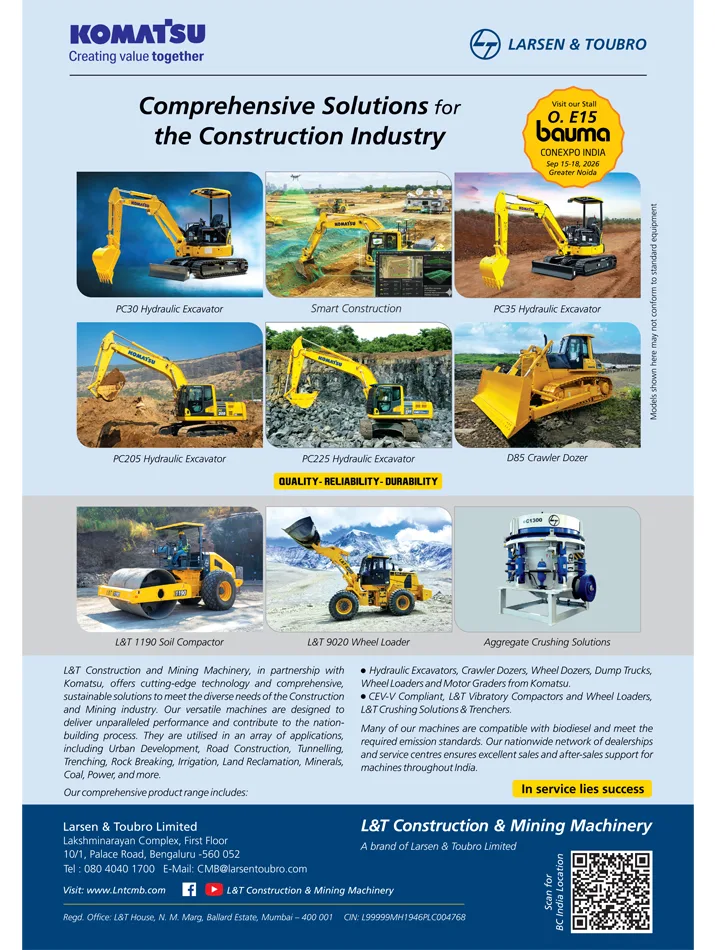
Core workhorse platforms continue to evolve in parallel, balancing power with efficiency. The Komatsu PC225LC exemplifies this approach, offering a 20–23 tonne class configuration with engine output in the range of 165–168 HP, bucket capacities of 1.2–1.4 cubic meters, and digging depths exceeding 6 meters. Built with a long undercarriage for enhanced stability, the machine delivers consistent performance across road construction, quarrying, and heavy earthmoving applications. Its advanced hydraulic system ensures smooth control while maintaining high breakout force—critical for continuous, high-output operations.
Electrification is emerging as a defining shift in the equipment landscape. Machines such as the Volvo L120 Electric represent a move toward zero-emission construction, eliminating tailpipe emissions while maintaining performance parity with conventional diesel platforms. The electric drivetrain delivers instant torque, improving responsiveness in material handling cycles, while significantly reducing noise levels—making it particularly suited for urban projects and night-time operations where regulatory constraints are tightening. With fewer moving parts, such platforms also reduce maintenance requirements and downtime, improving overall lifecycle economics.
At the same time, precision is becoming central to foundational processes. Equipment like the Volvo SD110 integrates intelligent compaction technologies that provide real-time feedback to operators, guiding them toward optimal density levels. This reduces the risks of under- or over-compaction—both of which can compromise structural integrity—while minimizing rework and ensuring consistency across road layers. As road durability becomes a critical performance metric, such advancements are embedding quality directly into execution.
Domestic innovation is also aligning closely with these shifts, particularly in designing equipment tailored to Indian operating conditions. Machines such as the Mahindra COMPAX mini compactor reflect a growing focus on fuel efficiency, durability, and operator-centric performance within compact equipment segments. Powered by a 2.0L, 3-cylinder engine delivering 25 hp and 125 Nm torque, and equipped with dual-frequency vibration modes, the machine is engineered to deliver adaptable and consistent compaction across varied soil conditions.
Beyond core performance, the emphasis is on lifecycle value. Features such as a robust drum design, simplified maintenance architecture, and ergonomic operator environment—supported by ROPS-certified canopy and intuitive controls—ensure reliability and sustained productivity across long operating hours. Backed by an extensive service and spares network, the offering also reflects a broader push toward strengthening uptime and customer support, particularly in distributed project environments.

This approach is anchored in localized engineering combined with global performance benchmarks. As Dr. Venkat Srinivas, Business Head – Mahindra Truck, Bus and Construction Equipment, and Executive Director & CEO – SML Mahindra Ltd, Mahindra Group, notes, “Our machines are designed to deliver higher earnings and profitability for customers, combining fuel efficiency, robust build, and advanced technology suited to India’s infrastructure ecosystem.”
Beyond individual machine advancements, the transformation of road construction equipment is increasingly being driven by integrated process innovation—where precision, digital visibility, and sustainability converge across the project lifecycle.
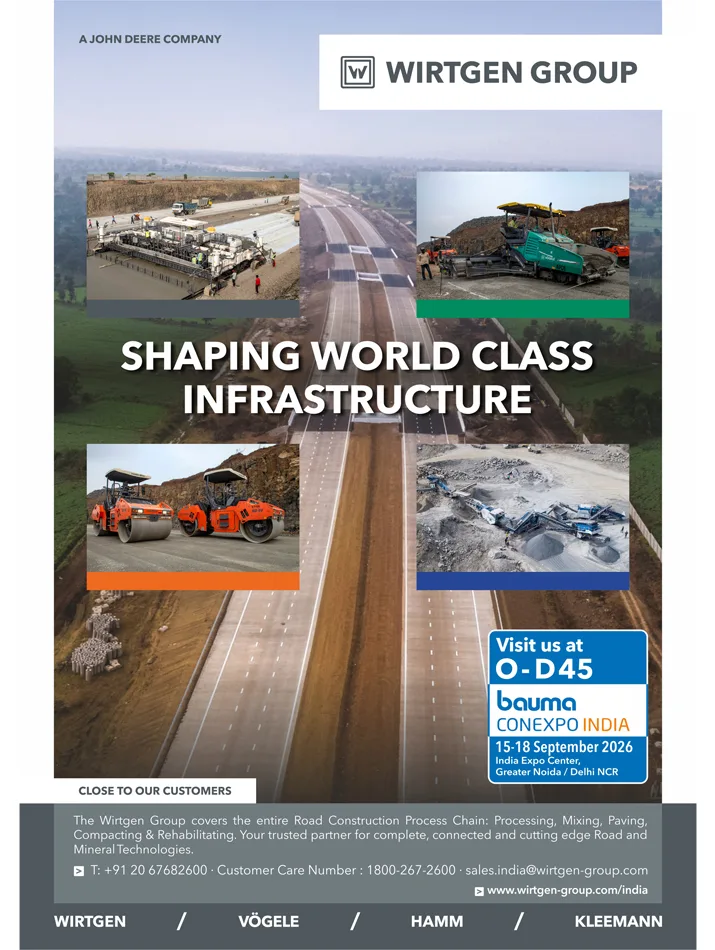
In road rehabilitation and surface preparation, companies like Wirtgen are redefining execution through intelligent milling and compaction technologies. Advanced cold milling machines now enable highly controlled removal of asphalt layers with precise depth accuracy, ensuring uniform surface preparation—critical for long-term pavement performance. Equally significant is their ability to support material recycling, allowing milled asphalt to be reused, reducing both input costs and environmental impact.
This precision-led approach extends into compaction. Modern tandem rollers and soil compactors are now equipped with intelligent compaction systems that provide real-time feedback on density levels, enabling operators to achieve uniform results with fewer passes. The integration of digital platforms such as SPECTIVE CONNECT further enhances this capability, offering live monitoring of machine performance and process flow—effectively shifting construction toward a data-driven execution model.
Parallel to global innovation, localized engineering is playing an equally important role. Companies such as Pai Machines are introducing equipment tailored specifically to Indian operating conditions, integrating features like flow-on-demand hydraulic systems and adaptive power modes. These enable machines to dynamically adjust performance based on workload, improving fuel efficiency while maintaining consistent output. In a market defined by long operating hours and varied terrain, such context-driven innovation is critical to ensuring both reliability and cost control.
Similarly, precision-led machines like the CASE 865B motor grader are elevating the importance of accuracy in surface preparation—a stage that directly influences road quality and safety. Powered by a high-output engine and equipped with a multi-radius moldboard design, the machine enables smoother material flow, reduces resistance during grading, and improves fuel efficiency. Advanced hydraulic systems and fine blade control allow operators to achieve consistent road geometry with fewer passes, minimizing rework and ensuring uniformity across long stretches. In modern road construction, where even minor deviations can impact ride quality and structural performance, such precision-driven grading solutions are becoming indispensable.
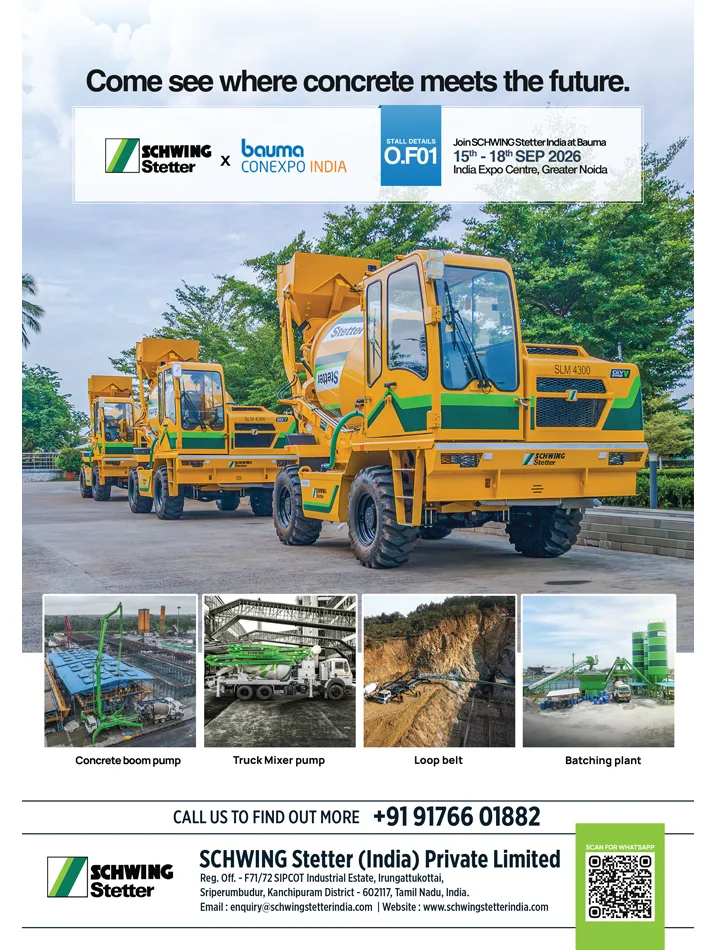
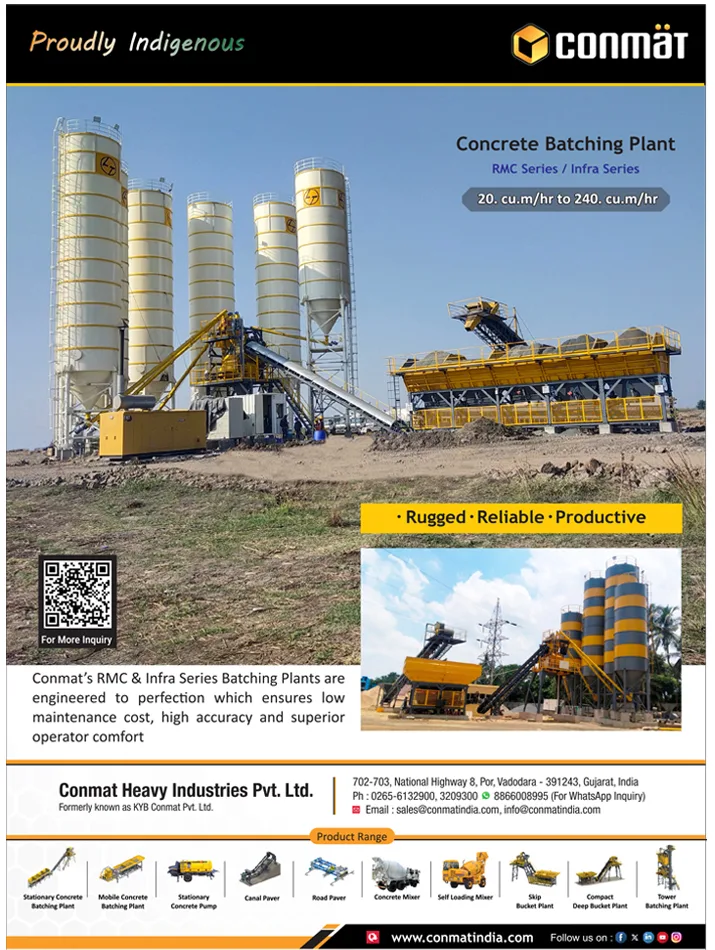
Material production and processing—often underrepresented in equipment discussions—is emerging as a critical lever in determining road durability. Solutions such as the Schwing Stetter M1 batching plant are introducing automated, digitally controlled batching systems that ensure accurate proportioning of materials and consistent mix quality across cycles. This level of precision significantly reduces variability, which is essential for achieving uniform strength and long-term performance in concrete roads. Its modular design enables quick installation and scalability across project sites, while optimized material handling systems improve throughput and reduce wastage. Increasingly, such plants are also aligned with sustainability goals, supporting better resource utilization and process efficiency—reinforcing the idea that road quality begins not on-site, but at the point of material production.
Even within excavator segments, innovation is becoming more application-specific, reflecting the growing segmentation of infrastructure needs. Mid-sized platforms like the Hyundai R140L Smart Plus are designed to bridge the gap between compact and heavy machines, offering an optimal balance of power, fuel efficiency, and control. Equipped with Hyundai’s CAPO (Computer Aided Power Optimization) system, the machine dynamically aligns engine output with hydraulic demand, ensuring consistent performance while minimizing fuel consumption. Features such as auto deceleration reduce idle fuel burn, while electro-hydraulic controls enhance precision during trenching and edge work. With a long undercarriage for improved stability and a digging depth exceeding 5 meters, such machines are particularly suited for secondary highways, urban expansion, drainage works, and utility-linked construction—segments where maneuverability, accuracy, and cost efficiency are equally critical.
Together, these developments highlight a broader shift in the industry—from isolated machine upgrades to an interconnected ecosystem of equipment, processes, and digital systems. Whether through precision milling, intelligent compaction, adaptive hydraulics, or automated material production, the focus is increasingly on embedding efficiency and consistency at every stage of road construction. In this evolving landscape, competitive advantage will be defined not just by machine capability, but by how seamlessly these technologies integrate to deliver predictable, high-quality outcomes at scale.
Reconfiguring Ownership, Redefining Value
The move toward efficiency, intelligence, and lifecycle performance is also redefining how equipment is owned, financed, and deployed. Rising equipment costs—driven by emission upgrades, digital integration, and higher performance standards—are pushing contractors toward more flexible models such as rental, leasing, and equipment-as-a-service. Access is increasingly being prioritized over ownership. At the same time, OEMs are moving up the value chain. The traditional product-led model is evolving into integrated offerings that combine machines with financing, telematics, predictive maintenance, and uptime guarantees. This is redefining value.
Equipment is no longer evaluated on acquisition cost alone, but on total cost of ownership, utilization rates, and output per hour. Contractors are optimizing fleets not for scale, but for efficiency—seeking machines that deliver higher productivity, lower downtime, and predictable performance across project cycles. In effect, the industry is shifting from asset-heavy operations to outcome-driven models—where performance, not possession, defines competitiveness.
Sustainability Moves to the Core
Sustainability in road construction is no longer a parallel agenda—it is increasingly being embedded within how roads are designed, built, and maintained. The shift is most visible in process-level innovation, particularly in material usage and lifecycle optimization. Technologies such as advanced cold milling and in-situ recycling—led by players like Wirtgen—are enabling contractors to reuse milled asphalt directly within new road layers. This reduces dependence on virgin aggregates and bitumen, lowers transportation requirements, and significantly cuts project-level emissions, while also improving cost efficiency.
Compaction and paving processes are also becoming more resource-efficient. Intelligent compaction systems—now integrated across modern rollers—are enabling operators to achieve optimal density with fewer passes, reducing fuel consumption and minimizing the risk of over-compaction. Similarly, energy-efficient asphalt plants, including high-recycling-capacity systems from companies like Marini, are allowing greater use of reclaimed asphalt pavement (RAP), aligning sustainability with material efficiency.
Material production is another critical lever. Digitally controlled batching systems such as the Schwing Stetter M1 are ensuring precise mix design and consistent output, reducing variability and wastage at source. In parallel, wet mix macadam (WMM) and drum mix plants—such as those offered by Vatsal Engineers—are improving process control, optimizing fuel use, and ensuring uniform material quality across base and surface layers.
Even at the equipment level, sustainability is increasingly being delivered through efficiency rather than substitution. Fuel-optimized engines, adaptive hydraulic systems, and precision-led grading technologies are reducing overall energy consumption while improving output. Machines are being engineered to do more work in fewer cycles—cutting both emissions and operating costs.
What is emerging is a clear convergence. Sustainability in road construction is no longer driven solely by regulatory pressure—it is being enabled by better engineering, smarter processes, and improved resource utilization. The ability to reduce emissions is increasingly tied to the ability to reduce inefficiencies. In this evolving landscape, building sustainably is no longer a trade-off. It is becoming the most efficient way to build.
The Strategic Inflection Point
India’s road construction and equipment ecosystem is at a defining moment. The first phase was about building scale. The current phase is about delivering efficiency. The next phase will be about embedding intelligence. The scale of opportunity remains undeniable, with the market set to more than double over the next decade. But the competitive edge will not come from building more—it will come from building better.
Because in the decade ahead, infrastructure will not be judged by kilometers laid, but by how effectively it reduces friction across the economy. Roads are no longer endpoints of development—they are enablers of velocity. And in that equation, it is the convergence of execution discipline, equipment intelligence, and system-level efficiency that will determine how far—and how fast—India can move.
Fast Facts
- India’s road construction market is valued at ~USD 156–160 billion (2025) and is projected to exceed USD 350–360 billion by 2034, growing at ~9–10% CAGR.
- Highway construction in India has peaked at 35–37 km per day, among the highest globally.
- The sector is expected to grow at a moderated 3–5% in the near term (FY2027) due to execution delays and cost pressures.
- India’s construction equipment market stands at ~USD 15–16 billion, with expected growth of 7–8% CAGR, outpacing global averages.
- Globally, the construction equipment market is projected to reach ~USD 350 billion by 2034, growing at a slower 3–4% CAGR.