
HD HYUNDAI Construction Equipment, India – Building a Comfortable Tomorrow with Smart, Safer & Innovative Solutions
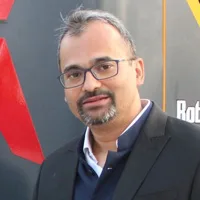
Since its inception in 2007, HD Hyundai Construction Equipment India has come a long way. To date, the company has rolled out over 50,000 machines from its Chakan plant, making it India’s largest exporter and the second-largest manufacturer of excavators. In an exclusive interview with CONSTRUCTION OPPORTUNITIES, RAJA SHARMA, HEAD – PRODUCT MARKETING, HD HYUNDAI CONSTRUCTION EQUIPMENT INDIA, speaks about the company’s journey in India, its launches at EXCON 2025, and much more.
How has HD HYUNDAI CE’s journey in India and what are the key products and technologies you have launched at Excon 2025?
HD Hyundai’s journey in India spans nearly 18 years. We began with an initial investment of `300 crores to set up our manufacturing plant, and over the years, we have continued to invest steadily. Today, our Pune plant not only caters to the Indian market but also exports to more than 35 countries worldwide.
Over the past 18 years, Hyundai has achieved a market share of nearly 18% in the excavator segment we operate in. This success and milestone have been driven largely by strong customer retention and loyalty toward the brand. The foundation of this loyalty lies in a clear and consistent philosophy we adopted from the very beginning: listening to our customers and reflecting their feedback in our business strategies. This customer-centric approach has been deeply embedded in our product strategy as well. The products we offer today are a direct reflection of what our customers have taught us over the years. We also recognized early on that India is a highly diverse and complex market. For instance, Gujarat has extensive salt farming applications, Rajasthan is known for marble and granite operations, while pan-India activities such as stone quarrying and earthwork are common across regions.
Understanding that each application has unique requirements, we focused on identifying specific customer needs across different regions. Based on these insights and customer expectations, we designed and developed products tailored to a wide range of applications, ensuring relevance and value for our customers across the country. What we see today is a direct reflection of customers preferences, which has resulted in a very high customer retention rate. Hyundai has grown as a brand because, in the aftermarket, it offers one of the highest resale values. Our products are simplifies, easy to maintain,and supported by extended service hours. Additionally, the cost per unit- whether in production or fuel consumption- is significantly lower. Over the last 18 years, we have expanded our presence across India and now work with 38 dealers to serve our customers. We also operate more than 325 offices that stock spare parts and are staffed with trained engineers. These offices act as customer touchpoints, enabling us to reach customers and respond to their requirements within the same day. Wherever there is a strong customer cluster, we ensure our own offices are present. This has been our journey in India.
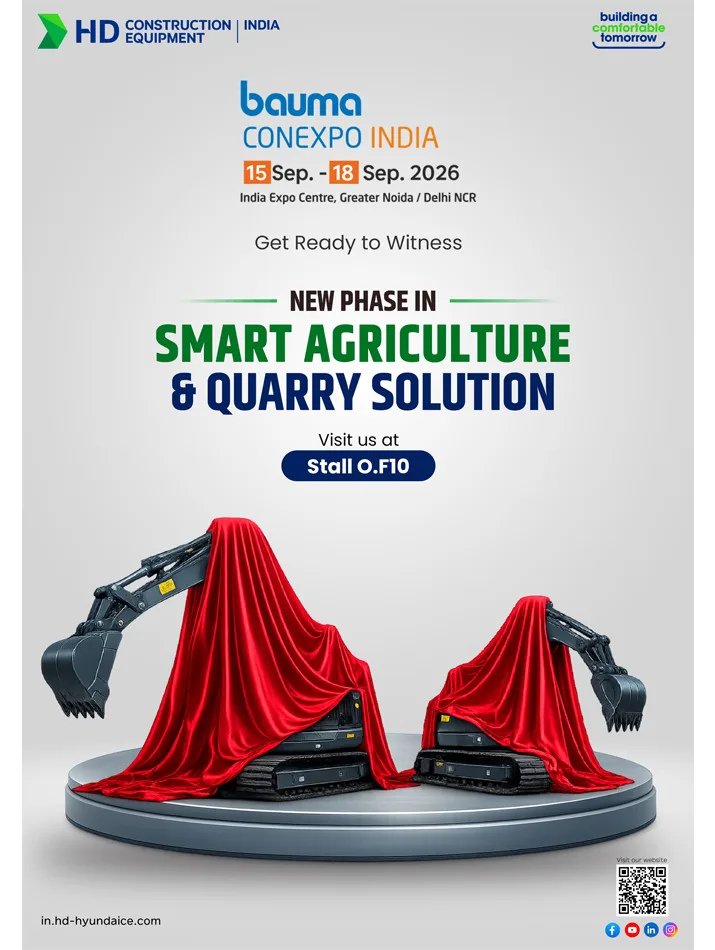
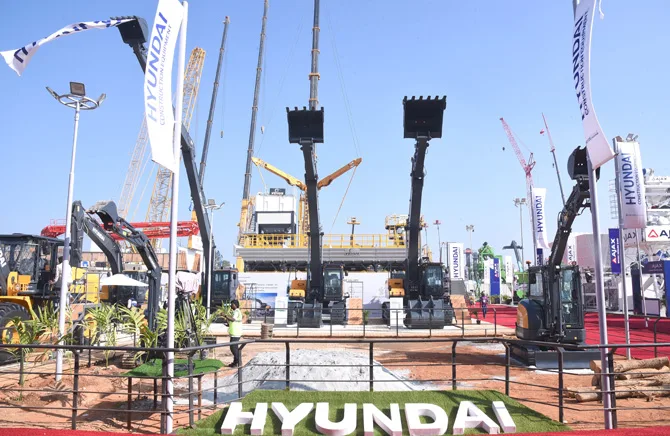
At Excon, we are showcasing products for the agriculture and urban infrastructure sectors. We have introduced two newly launched mini excavator models from Hyundai in the 3-ton and 3.5-ton categories. The key highlight of these machines is their compact design. In agriculture applications, compact size and zero tail radius are essential for easy maneuverability. Similarly, in urban applications where space constraints are common, these machines perform effectively, and the customer response has been very positive. For road infrastructure and irrigation—what we refer to as the construction range—we are displaying eight models. Most of these belong to the Smart X Plus series, which was launched just two months ago at our Chakan plant. These models are upgraded versions of the previous series, offering improved fuel efficiency and enhanced durability.
In addition, Excon exclusively features a new concept model, the R210E. The “E” stands for high fuel efficiency and superior operating economics for the end customer. This model has been specifically designed for rental customers. With extended maintenance intervals, low operating costs, and a completely redesigned structure, this series represents a major upgrade. The hydraulics are also entirely new and not interchangeable with existing models. We strongly believe this new series will help rental customers improve profitability in a highly competitive market, where savings directly translate into earnings. Furthermore, in the mining segment, we have four models on display in the 30-ton and 50-ton categories. We have witnessed strong footfall at the exhibition and have also received a healthy number of order bookings.
In terms of AI, you know digitalization and Telematics. How are you embedding that into the machines so that the end user gets the full benefits?
Across all our products, whether an excavator operating in agriculture, construction, or mining, or equipment such as wheel loaders and material-handling machines, we have integrated a remote management system as a standard feature. This system provides fault code alerts and maintenance schedules, which are communicated to customers in their local dialects.
To better connect with Indian customers, we have continuously upgraded this system by expanding its linguistic capabilities. Currently, it supports eight Indian languages, and we plan to add more vernacular languages in the coming years. This ensures easier adoption and better engagement with customers across regions. Today, this remote management system is an integral part of our standard offering across the product range.
Which customer segments and markets are you targeting with these new launches?
We offer a wide range of models that cater to applications ranging from agriculture and small urban infrastructure to large-scale construction industry. Our product portfolio covers almost every segment—for example, in mining, we provide specialized solutions for coal mining, while for marble and granite block handling, we offer dedicated machines designed for those specific needs.
In addition to product diversification, we are also upgrading the way we communicate with our customers. We aim to differentiate ourselves in the market by being more proactive. While alerting customers after a fault code appears is one aspect of support, we go a step further. Through predictive maintenance and advance maintenance scheduling, we proactively inform customers before issues arise. Beyond messages and emails, our call centers also reach out directly to customers to remind them and help them plan their maintenance activities, ensuring improved uptime and operational efficiency.
Is there anything special you are doing for the excavators which go into the mining industry?
Yes. For mining customers, we go beyond providing fault codes, alerts, and preventive maintenance schedules. While we do keep customers informed about these aspects, we also focus strongly on operator behavior and machine usage patterns.
Using elements of AI-enabled analytics though not yet full-scale AI—we analyze the operator’s driving style and operational behavior. We study factors such as operating skills, driving patterns, and the frequency of extreme operations. For instance, repeated use of reliefs or frequent exposure to sudden jerks may indicate operational stress or unintentional misuse, which can happen since operators are human.
For large mining machines, there are specific operational do’s and don’ts. When usage patterns exceed standard operating norms, the system generates detailed reports. These insights are then shared not only with the operators but also with the project in-charge and equipment owners. This helps educate all stakeholders about potential risks, higher operating costs, or possible breakdowns, enabling timely corrective actions.
This collaborative and proactive approach, working closely with operators, owners, and project teams helps improve machine uptime, safety, and efficiency. It is one of the key reasons why we have been able to achieve and sustain an approximately 18% market share today.
The market has been a little slow over the last year. Going forward, how do you see the market performing ahead?
From an industry perspective, the slowdown came as a bit of a surprise, as we had not anticipated the market to fall below last year’s levels. We now expect the market to have declined by approximately 4% to 4.5%. By the end of this calendar year—around December—we will have more clarity, but at present, a contraction of around 4% seems likely.
This decline is primarily due to a slowdown in project announcements beginning around the middle of last year. Although announcements have started picking up again this year, infrastructure projects typically have long gestation periods—ranging from six to twelve months from announcement to execution. As a result, the delays experienced earlier are now being reflected in current market conditions. Looking ahead, we believe this is a short-term impact. Given the increasing number of project announcements and strong government focus on infrastructure, next year should perform better than 2025. We expect the market to grow by around 5% on an absolute basis, bringing it closer to—or even exceeding—the levels seen in 2024. While 2026 may not fully reach 2024 levels, it should come close. We believe 2027 and 2028 will be particularly strong years for the industry. With 2029 being an election year, there is significant urgency to complete infrastructure projects beforehand. The government has also emphasized expediting execution, and we understand that both the Ministry of Coal and the Ministry of Road Transport, including NHAI, have formed high-level committees to fast-track pending works. These committees are focused on identifying the causes of delays and addressing administrative challenges to ensure timely project completion. Overall, this gives us confidence in a stronger medium-term outlook for the industry.
And how do you find Hyundai performing in all these opportunities?
We strongly believe that continued investment in India is essential because what we are witnessing today is just the beginning of a much larger growth story. From the outset, we have invested with the conviction that India has significant potential, and that belief has only strengthened over time. Our investments span expanding our manufacturing plant, developing new products, and adopting advanced technologies. These investments are not made solely for the present; they reflect our long-term commitment to serving Indian customers while also positioning India as a global manufacturing and export hub.
Currently, we serve nearly 35 countries from our Indian operations, and going forward, we expect to reach even more markets as Indian-made products gain broader global acceptance. Additionally, new government regulations and standards provide us with a strong platform to introduce our products into advanced economies. Overall, we are confident that Hyundai is well-positioned to capitalize on the opportunities ahead in India and across global markets.