
TK Elevator continues to deliver game-changing innovations that go beyond conventional hardware.

TK Elevator offers a comprehensive range of mobility products and services, including passenger, freight and panoramic elevators, for both low and high-rise properties, its commitment to quality and innovation covers the entire life cycle of elevators, escalators and moving walks. In an exclusive interview to CONSTRUCTION OPPORTUNITIES, MANISH MEHAN, CEO & MD, TK ELEVATOR (INDIA) PVT. LTD, gives an overview of the Indian elevator & escalator industry, innovative technologies and a lot more.
Give us an overview on the Indian Elevators & Escalators market, latest technology trends and market dynamics.
India’s elevators and escalators market continues to be one of the fastest-growing and most dynamic segments of the built environment, driven by rapid urbanisation, rising high-rise construction, expanding infrastructure and increasing demand for smarter vertical transport.
According to a recent industry report by IMARC Group, the combined Indian elevator and escalator market was valued at approximately USD 14.6 billion in 2024 and is expected to grow steadily through 2025–26, supported by sustained construction activity and the increasing adoption of digital and connected technologies. Near-term forecasts suggest the market could expand at an annual growth rate of around 6 percent, driven by rising new installations and growing modernisation demand across residential, commercial and public infrastructure segments.
Market growth is underpinned by several structural drivers: rapid vertical real estate development across Tier-1, Tier-2 and Tier-3 cities; large-scale infrastructure programmes such as metro rail networks, airports and transit hubs; and government initiatives like Smart Cities and affordable housing that are accelerating demand for reliable vertical mobility systems. India still has relatively low elevator penetration compared with many developed economies, indicating significant headroom for future growth as urban density increases.
From a technology standpoint, the industry is clearly shifting from a volume-driven model to a value-driven ecosystem. Developers and building owners are increasingly prioritising reliability, uptime, lifecycle performance, safety and sustainability alongside initial costs — driving stronger adoption of IoT-enabled systems, predictive maintenance platforms, intelligent traffic management and energy-efficient designs. Solutions like TK Elevator’s MAX platform directly address this shift by enabling condition-based maintenance that reduces unplanned downtime and enhances user experience.
Sustainability and compliance are also central to decision-making in 2025–26. Energy-efficient drive systems, regenerative technologies and smart controls are increasingly expected as standard, aligned with green building norms and long-term operating cost optimisation. In parallel, improved safety standards and accessibility expectations are shaping regulatory frameworks and customer priorities.
Overall, the Indian elevators and escalators market in 2025–26 is expanding both in scale and sophistication. For TK Elevator, this represents a significant opportunity to combine global innovation expertise with locally relevant solutions that support India’s journey toward smarter, safer and more sustainable cities.
Tell us about your product portfolio of elevators & escalators. Detail us on the Game changing technology/products developed by your company.
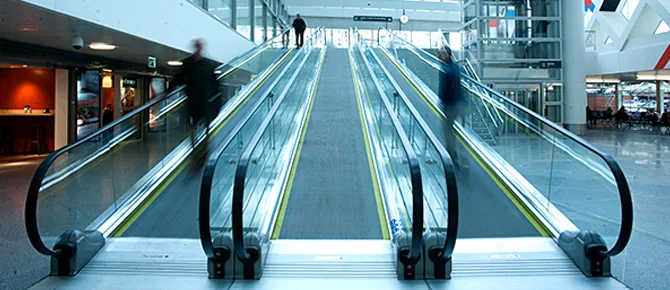
TK Elevator’s product portfolio is built around modularity, performance and adaptability, enabling us to serve a wide spectrum of Indian building requirements—from residential and commercial developments to high-traffic public infrastructure. Our elevator range includes solutions optimised for low- and mid-rise buildings, as well as advanced systems designed for high-rise and mixed-use projects where space efficiency, ride comfort and reliability are critical. In the escalator and moving walk segment, we offer heavy-duty solutions engineered for continuous operation in demanding environments such as metro stations, airports, malls and transport hubs.
A key strength of TK Elevator in India is our strong ‘Make in India’ focus. A significant part of our product portfolio is locally manufactured and engineered to meet Indian operating conditions, usage patterns and regulatory requirements. Our India-specific product lines are designed to deliver the right balance of performance, durability and cost efficiency, while maintaining global TK Elevator quality and safety standards. Localisation also enables faster project execution, better supply-chain resilience and responsive service support across the country.
From a technology perspective, TK Elevator continues to deliver game-changing innovations that go beyond conventional hardware. Our MAX digital solutions platform is a cornerstone of this strategy, transforming maintenance into a predictive, condition-based model using real-time data and advanced analytics. This significantly improves equipment availability, enhances safety and reduces unplanned downtime—critical benefits for Indian buildings with high passenger intensity.
We have also introduced intelligent traffic and destination management solutions that optimise passenger flow and reduce waiting times, especially in high-density commercial and mixed-use developments. Complementing this are modern car designs, intuitive interfaces and touchless operating features that enhance passenger comfort, hygiene and accessibility.
Overall, TK Elevator’s portfolio in India reflects a strong combination of local manufacturing, application-driven product design and digital innovation—supporting the country’s urban growth while aligning with national initiatives such as Make in India and the push toward smarter, more sustainable cities.
How is your organisation integrating advancements in digitalisation, automation and predictive technologies to enhance productivity, safety, lifecycle value and overall machine performance for customers?
At TK Elevator, digitalisation, automation and predictive technologies are deeply embedded into how we design, operate and maintain our products, with a clear focus on improving productivity, safety, lifecycle value and overall machine performance for customers. Our strategy is centred on transforming elevators and escalators from standalone assets into intelligent, connected systems.
Predictive intelligence plays a critical role through our MAX digital solutions platform, which uses real-time operational data, cloud connectivity and advanced analytics to continuously monitor equipment health. By detecting early signs of wear, anomalies or performance degradation, MAX enables proactive and condition-based maintenance, significantly reducing unplanned downtime and improving system reliability and safety.
When fully deployed, automation and data-driven insights can enhance productivity across service operations. Technicians receive precise diagnostics and recommendations before arriving on site, enabling faster resolution, fewer repeat visits and more efficient use of resources. In certain scenarios, issues can be resolved remotely, further improving response times and minimising service disruptions for building occupants.
From a lifecycle perspective, predictive maintenance optimises maintenance intervals, extends component life and lowers total cost of ownership. Continuous performance data also supports informed decision-making around modernisation and upgrades, helping customers maximise long-term asset value.
In parallel, intelligent control systems and digital traffic management technologies improve ride comfort, passenger flow and energy efficiency, particularly in high-usage buildings. Centralised dashboards and performance analytics provide building owners and facility managers with greater transparency and control across their vertical mobility assets.
By integrating digitalisation, automation and predictive technologies across the entire value chain, TK Elevator offers its customers the opportunity to shift from a reactive service model to a proactive, intelligence-led approach—delivering safer operations, higher productivity and sustained performance throughout the equipment lifecycle.
What sort of Customer centric initiatives has your company undertaken to be one step ahead of competition?
Customer centricity at TK Elevator is not a single initiative, but a structured approach that influences how we design products, deliver services and engage with customers throughout the equipment lifecycle. Our focus is on understanding customer needs and delivering measurable value rather than reacting to issues after they arise.
One of our key customer-focused initiatives is the shift toward proactive and transparent service models. Through digital connectivity and data-driven insights, customers gain greater visibility into equipment performance, maintenance activities and service outcomes, enabling informed decision-making and higher confidence in system reliability.
We have also invested significantly in localised solutions and support. By combining Make in India manufacturing with strong regional service networks, we ensure faster response times, consistent quality and products that are aligned with Indian usage patterns, site conditions and regulatory requirements. This localisation helps customers achieve better lifecycle value while reducing operational disruptions.
Safety and reliability remain at the core of our customer promise. From rigorous quality standards and compliance-driven engineering to ongoing training of technicians, we ensure that customer trust is reinforced at every touchpoint.
By combining proactive service, localised execution, transparency and continuous engagement, TK Elevator stays ahead of competition—delivering not just products, but long-term partnerships built on performance, reliability and customer confidence.
Ensuring high uptime and reliable performance across diverse and demanding operating conditions is a core priority for TK Elevator, and it is driven by a combination of robust service infrastructure, digital readiness and skilled people. Our aftermarket strategy is designed to support customers throughout the entire lifecycle of their equipment, regardless of building type or usage intensity.
A key enabler of high uptime is our shift toward proactive and predictive service models. In the latest high-end applications, through digital connectivity and advanced analytics, we are able to monitor equipment health continuously, detect early signs of potential issues and intervene before they escalate into breakdowns. This approach significantly reduces unplanned outages and improves overall equipment availability.
Strong local service presence is another critical factor. With a wide network of trained technicians across regions, supported by local spare-parts availability and Make in India manufacturing, we are able to respond quickly and effectively, even in challenging site conditions or high-traffic environments.
Customer service is reinforced through structured service processes, clear communication and consistent performance monitoring. Customers benefit from greater transparency into maintenance activities, service outcomes and machine condition, enabling trust and long-term partnerships.
Equally important is continuous capability building. Our technicians undergo regular training on both mechanical systems and digital technologies, ensuring safe, compliant and efficient service delivery across legacy as well as next-generation equipment.
By combining predictive maintenance, strong local execution, skilled teams and transparent customer engagement, TK Elevator ensures dependable aftermarket support and sustained high uptime—helping customers operate their buildings with confidence, safety and minimal disruption.
Do you practice ‘Make in India and Sell Globally,’ use your India manufacturing base to supply to the global market.
TK Elevator follows the “Make in India” approach and is gradually building capabilities that can support global requirements as well. Our manufacturing facilities in India operate in line with TK Elevator’s global quality, safety and engineering standards, allowing us to meet both domestic needs and future international expectations.
Currently, the focus of our India manufacturing base is on serving the local market efficiently. At the same time, we have plans to progressively supply select products and components to global and regional markets as capacities, localisation levels and demand align.
Manufacturing in India helps optimise supply chains, improve delivery timelines and respond better to diverse project requirements. Products developed locally are validated against applicable international codes and standards, ensuring they are suitable for wider deployment when required.
Overall, this approach supports long-term capability building, skill development and technology integration in India, while keeping the business aligned with global frameworks and future growth opportunities.
How is your organisation embedding sustainability, cleaner technologies and environmentally responsible practices into its products, operations and long-term strategy?
Sustainability is embedded into TK Elevator’s products, operations and long-term planning through a combination of energy-efficient design, responsible manufacturing practices and lifecycle-focused service models. Our approach is centred on reducing environmental impact while maintaining safety, reliability and performance.
At the product level, we focus on energy-efficient systems such as optimised drive technologies, intelligent controls and regenerative features that help lower power consumption in elevators and escalators, particularly in high-usage buildings. Digital monitoring and predictive maintenance also contribute to sustainability by extending equipment life, reducing unplanned repairs and minimising material waste over the lifecycle of the system.
Across operations, we are working toward cleaner and more efficient manufacturing processes, including improved energy management, waste reduction and responsible sourcing of materials. Local manufacturing under the Make in India framework helps shorten supply chains, reduce transportation-related emissions and support more efficient logistics.
From a long-term perspective, sustainability is integrated into how we support customers. Data-driven insights help building owners optimise energy use and plan upgrades based on lifecycle performance rather than short-term fixes. At the same time, continuous compliance with evolving safety and environmental standards ensures that our solutions remain aligned with future regulatory and urban sustainability goals.
Overall, TK Elevator’s sustainability efforts focus on steady, measurable improvements—supporting more efficient buildings, responsible operations and resilient urban infrastructure over the long term.
Your outlook for the Indian elevators & escalators market. Which sectors will be the major demand drivers?
The outlook for the Indian elevators and escalators market remains robust, supported by multiple long-term structural trends and sectoral growth drivers. Continued urbanisation and the rise of vertical construction are central to market expansion, as residential and commercial buildings increasingly rely on efficient vertical mobility solutions. Over the next several years, demand is expected to remain strong not just in major metropolitan hubs but increasingly in Tier-2 and Tier-3 cities where multi-story housing and mixed-use developments are becoming more common.
Residential real estate — particularly high-rise apartments and multi-family complexes — will continue to be a major growth engine as India’s urban population grows and land constraints encourage vertical development. Alongside this, the commercial sector — including office buildings, retail spaces, IT parks and business complexes — is a key source of sustained demand, driven by expanding economic activity and modern workspace requirements.
Public infrastructure and institutional projects are also significant contributors to market growth. Expansion of metro rail networks, modernization of airports, hospitals, educational institutions and government facilities requires large numbers of elevators and escalators to ensure accessibility and efficient people movement. The Smart Cities Mission and other government-led urban initiatives are reinforcing this trend by integrating vertical transport into broader urban mobility planning.
Another important demand driver is technology adoption and modernisation. There is growing interest in smart, energy-efficient and connected vertical transport systems that offer features such as predictive maintenance, IoT integration, touchless controls and improved safety — especially in premium residential and commercial projects. At the same time, the need to modernise aging equipment in older buildings is creating a parallel market for retrofit upgrades, adding to overall demand.
In summary, India’s elevators and escalators market outlook is positive, underpinned by urbanisation, infrastructure expansion, commercial and residential construction, and increasing demand for modern, digital and sustainable vertical mobility solutions. These combined drivers are expected to sustain healthy growth over the coming years as the nation’s urban landscape continues to evolve.