
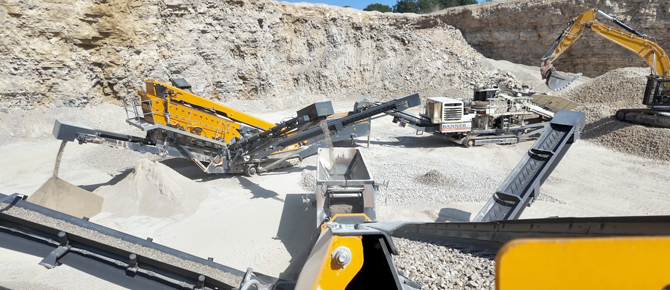
Crushing & Screening Eqpt From Brawn to Brain
Crushing and screening equipment—once the gritty, diesel-driven workhorses of construction and mining—are now at the forefront of a technological leap. In 2025, these machines are evolving into smart, electrified, and highly mobile systems built to meet the demands of a world rapidly laying roads, railways, tunnels, and renewable corridors. With the global crushing, screening, and mineral processing equipment market projected to reach $39.32 billion in the next few years, OEMs are doubling down on innovation—bringing to market cleaner, smarter, and more modular machines that align with infrastructure ambitions and sustainability mandates across regions. From India’s record infrastructure push to Europe’s green construction mandates, next-gen crushers and screeners are enabling faster builds, lower emissions, and higher precision on every terrain. Welcome to a new era—where rock-breaking meets rule-breaking.…. writes, PRERNA SHARMA.
As the global race to build faster roads, smarter cities, renewable corridors, and modern railways accelerates, one of the most critical enablers of this transformation—the crushing and screening equipment sector—is quietly undergoing its own revolution. Long perceived as a rugged, mechanical subset of construction, this industry is embracing a new identity. Today’s stone crushing and screening machines are not just about brute force; they are designed to move, think, and adapt—blending mobility, digital intelligence, and sustainability into their very framework.
The scale of transformation is immense. Valued at around $7.27 billion in 2025, the global stone crushing equipment market is poised to nearly double over the next decade, reaching an estimated $14.6 billion by 2034. Screening equipment, an equally vital cog in this machinery ecosystem, is also experiencing accelerated growth, driven by the need for material precision, operational agility, and environmental compliance. Across markets, the shift is no longer just about output capacity, but about how efficiently, intelligently, and cleanly that output can be delivered.
A Market in Motion: Mobility Takes Center Stage
One of the most defining shifts in this sector is the growing dominance of mobility. Where once massive, fixed crushing plants were the standard, today’s projects increasingly demand portable and mobile solutions. Mobile crushers and screeners have emerged as indispensable assets, especially in emerging economies, offering not only flexibility but also substantial savings in transportation and installation time. These machines are now essential to infrastructure development in fast-growing regions like India, Indonesia, and Vietnam, where road redevelopment, bridge construction, and smart city projects are advancing at speed.
The global mobile crushers and screeners market size was estimated at $3,992.2 million in 2024 and is projected to reach $5,353.9 million by 2030, growing at a CAGR of 5% from 2025 to 2030. The increasing demand for construction and mining activities is a significant catalyst, as these sectors require efficient materials handling and processing solutions. India’s PMGSY rural road program and the Gati Shakti infrastructure initiative, for instance, have catalyzed demand for mobile units that can be quickly deployed, relocated, and scaled without sacrificing performance. Compact designs, high-throughput capabilities, and modularity are emerging as baseline requirements. Equipment manufacturers are responding with nimble, fuel-efficient crushers and screeners that can operate across varied terrains and process materials ranging from virgin stone to recycled concrete and asphalt.
Smarter, Faster, Safer: Digital Intelligence Becomes the Differentiator
Equally transformative is the integration of digital intelligence into crushing and screening equipment. Machines are now embedded with smart sensors, IoT modules, and AI-based analytics platforms that enable predictive maintenance, fleet-wide performance monitoring, and real-time troubleshooting. Operators can oversee entire crushing trains from centralized dashboards, making proactive decisions to prevent downtime, optimize throughput, and extend component life. These capabilities are reshaping equipment from mere tools into intelligent assets, allowing crushing operations to become leaner, safer, and more responsive.
Crushing Equipment Goes Modular and Multi-Stage
Technological progress is evident across all categories of crushing equipment. Jaw crushers continue to dominate, especially in primary applications where simplicity and robustness are essential. Their reliability in handling hard rock and coarse aggregates keeps them in demand across Asia and Africa. Meanwhile, cone crushers and impact crushers are gaining popularity in more advanced markets, particularly for secondary and tertiary crushing stages where material refinement and shape control are critical. Hybrid versions are gaining momentum, combining energy efficiency with precision engineering. Even in relatively niche categories like roller crushers, momentum is building. These machines are proving valuable in cement and brick manufacturing, where fine-grain material and dust minimization are essential. At the same time, modular and track-mounted plants are finding favor among contractors looking for plug-and-play crushing solutions that don’t require permanent installations but deliver full-scale performance.
Crushing in the Age of Circular Construction
The coming years will likely witness an even deeper convergence of automation, electrification, and circularity. As governments and private players push for carbon neutrality and waste reduction, crushing and screening equipment will become central to recycling strategies—reprocessing demolished concrete, asphalt, and building waste into usable aggregates.
Equipment makers are already prototyping fully electric, autonomous crushing trains capable of operating off-grid or powered by renewable sources. What’s clear is that the sector is no longer playing catch-up to construction megatrends—it is leading from the front. With every innovation in mobility, intelligence, and efficiency, crushing and screening equipment is reshaping the way infrastructure is built, ensuring that what lies beneath the surface is as advanced as what rises above it.
The Digital Turn: From Steel to Silicon
In today’s crushing operations, data is as important as horsepower. The rise of digitally enabled crushers is transforming how contractors and quarry operators approach uptime, efficiency, and preventive maintenance. Leading equipment makers such as Sandvik, Metso Outotec, and Terex are integrating IoT sensors, real-time monitoring dashboards, and automated diagnostic systems into their latest models. These technologies offer operators deeper insights into wear patterns, load optimization, and energy consumption—cutting unplanned downtime and significantly lowering total cost of ownership.
In many new-generation machines, remote troubleshooting and predictive maintenance tools are no longer premium features—they’re standard inclusions. This digital layer is proving especially vital for large-scale operations in remote or harsh environments, where delays and breakdowns can be enormously costly.
India’s Screening Market: Aligned with Infrastructure Ambitions
In India, the screening equipment market continues its steady upward trajectory, driven by unprecedented investments in transport, mining, and urban infrastructure. Valued at around $971.7 million in 2024, the domestic market is expected to grow at a CAGR of approximately 5.1% through 2033. This growth reflects the government’s sustained infrastructure drive—across expressways, high-speed rail corridors, river-linking projects, and smart city developments.
One of the defining trends in India is the rapid adoption of mobile and modular screening units. With the nation’s vast and varied geography, contractors increasingly prefer track-mounted and wheeled screening systems that can be repositioned with ease. Modular systems further allow tailored deployment, letting contractors adapt quickly to evolving site conditions without costly redesigns.
Sustainability is also beginning to influence procurement decisions. India generates over 150 million tonnes of construction and demolition waste annually, prompting a pivot toward screens capable of handling recycled aggregates and finer waste streams. Hybrid and electric-drive models, too, are gaining attention, aligning with India’s green construction codes and net-zero commitments.
While technology adoption was once slow among mid-sized Indian firms, that tide is turning. IoT-enabled diagnostics, predictive analytics, and remote uptime monitoring are becoming common—not just among large EPCs but increasingly among regional contractors looking to optimize costs and extend machine life. In response, global OEMs have scaled up their India footprint. Metso’s Alwar plant, for example, expanded capacity by 30% in 2025 to cater to Indian and wider APAC demand.
Global Trends: Efficiency, Electrification, and Ecosystem Thinking
The screening equipment market size was valued at $7,218.88 million in 2024. The Screening Equipment Market industry is projected to grow from $7,481.36 million in 2025 to $11,856.75 million by 2035, exhibiting a CAGR of 4.5% during the forecast period (2025–2035). This trajectory is being driven by a blend of mining, energy, and recycling growth across both developed and emerging regions.
Mobility remains a dominant design driver. Whether in Australia’s remote iron ore belts or North America’s shale fields, equipment that can be rapidly deployed and easily transported is reshaping OEM product pipelines. Track-mounted and trailer-based systems have become standard offerings, with international players like Sandvik, Keestrack, Astec, and CDE Global expanding their mobile, high-frequency screening lines.
Environmental compliance, meanwhile, is influencing purchasing decisions in Europe and North America. Regulations are encouraging the shift toward electric and hybrid-powered screeners. Many of the latest launches aim to reduce fuel consumption by up to 40% through smart control architecture and optimized drive systems. Hybrid screens, combining diesel and electric sources, are particularly in demand for urban and eco-sensitive sites.
Digital intelligence is now deeply embedded in global screening technologies. Artificial intelligence, edge analytics, and digital twin simulations are being integrated into large-scale operations. These advancements enable operators to predict screen deck wear, modulate vibration patterns, and auto-regulate feed rates—all in real time, maximizing uptime and throughput. In 2025, innovations in AI-assisted filter press systems are also influencing screening processes in water-sensitive aggregate environments, particularly in Europe and China.
The Rental Economy: Rethinking Access and Ownership
A quiet but significant business model shift is reshaping how crushing equipment is procured and deployed. The rising popularity of rental and leasing models reflects a practical response to high capital costs. With mobile crushers ranging from USD 200,000 to over a million, many small and medium contractors are opting to rent rather than invest upfront. Rental access allows firms to scale operations quickly for large projects and dial down just as efficiently post-completion. This model is flourishing in regions where project-based construction dominates—such as Southeast Asia, Eastern Europe, and parts of Latin America.
Recognizing this shift, OEMs are designing machines tailored for rental use—prioritizing modularity, easy transport, and plug-and-play digital interfaces. The ripple effect is evident in service operations as well: responsive maintenance, fast-moving parts, and short turnaround times are becoming essential features of the rental ecosystem.
Next-Gen Equipment: Power Meets Precision
What’s clear is that the crushing equipment landscape is no longer defined solely by brute mechanical power. In 2025, the machines reshaping quarries, construction sites, and recycling hubs are cleaner, smarter, and more connected than ever before. This is the year where electric drive trains met edge analytics—marking the beginning of a new era where sustainability and intelligence sit at the core of crushing innovation.
Hailstone’s Hybrid Powerhouse: The Track Mounted Jaw Crusher in the Hail Track HT Series from Hailstone is used as a primary crusher either as a multistage crushing process or as a standalone unit. It is ideal for medium-sized aggregate production, as well as recycling of demolition waste such as concrete and asphalt waste. This track mounted jaw is easy to maintain, is environment friendly, energy efficient, durable and has a rigid design. The main components in a Hail Track HT Series track mounted jaw are jaw crusher, feed hopper, grizzly feeder, fine conveyor, hybrid power mode, magnetic separator, high mast light and conveyor. The 1000-belt-width discharge conveyor is driven by a motorized pulley and it is hydraulically foldable. The magnetic separator has a permanent magnet and its height is adjustable. The Hail Track HT Series track mounted jaw runs on hybrid power mode that is, it can be operated on both diesel and electric. The advantages of this product include mobility on uneven terrain, optimized weight and extensive platforms for maintenance. The machine has more lifetime and customers are loving this aspect. The jaw crusher has strong bolting for better strength, requires lesser maintenance, has higher mechanical efficiency and has a hydraulic CSS adjustment. The feed hopper is hydraulically foldable and has a wear resistant extension for more capacity. The Grizzly feeder, with wear resistant grizzly liners, has an efficient material flow with a high stroke vibrating unit. It has a long life and easy maintenance. The fine conveyor is a 180-degree rotatable conveyor. The 500-belt width fine conveyor is driven by a motorized pulley. The High Mast Light ensures lighting over a large area and has a high performance. With a weight of 53000 kgs, this Hail Track HT Series track mounted jaw is among the most sold products in India and abroad.
Kleemann’s Compact Crushers and Scalable Screens: Kleemann presents the first family member of the new NEO line in the shape of the MOBIREX MR 100(i) NEO mobile impact crusher. Thanks to its compact dimensions and low transport weight, the MOBIREX MR 100(i) NEO can be used flexibly, quickly and in a very wide variety of applications. Cramped conditions on construction sites or frequent application changes can be overcome easily. The potential uses range from different recycling applications, such as the processing of concrete, mixed rubble and asphalt, to the processing of soft to medium-hard natural stone.
With the MOBISCREEN MSS 1102 PRO, Kleemann presents the first screening plant in the PRO line. The plant is mainly used in natural stone and can work as a stand-alone machine or intelligently interlinked with other crushing and screening plants. With a feed size of 880 x 550 x 330 mm and a feed capacity of up to 750 tons per hour, the plant extends the screening portfolio upward. The large range of screen surfaces and the simple setting of screening parameters make it possible to adapt the MSS 1102 PRO easily to new application conditions or feed material. If a fine end-product needs to be screened from very coarse feed material, the plant can be quickly converted from three to two final product sizes. Further advantages of the plant include its simple operability thanks to its intuitive control system, easy access to all relevant machine components and its drive concept H-DRIVE with the option of an external power supply for operation with zero local emissions and therefore environmentally friendly work.
MB Crusher’s Tunnel Triumph in Jammu: The construction of India’s largest tunnel project in Kathua, Jammu, presents substantial logistical challenges, particularly in handling and processing large volumes of excavated materials. MB Crusher, known for its innovative solutions in material processing, is transforming the way contractors approach on-site GSB (Granular Sub Base) production. By leveraging MB Crusher’s advanced equipment, the project team is reducing transportation distances, cutting costs, and improving productivity. In this major project spanning 14 kms, contractors face the challenge of transporting raw materials from the excavation site to crushers located 60-70 kms away. Traditional solutions result in significant costs related to transport, loading, and unloading. MB Crusher’s on-site solutions eliminate these inefficiencies by processing materials like River Ved Material (RVM)and tunnel muck directly at the excavation site. It resulted in 50% cost reduction in transportation; Faster project timelines; and Greater control over GSB output quality (<60 mm).
The project team utilizes MB Crusher buckets for unparalleled on-site crushing performance. Previously relying on a 250 TPH stationary crusher, the team now integrates MB models like the MB BF90.3S4 and MB S18. Combined with Volvo EC210 D and occasionally Sany SY210 base machines, these crusher buckets meet the project’s demanding GSB production targets.
Sandvik Powers Ahead with the All-Electric QH443E: Sandvik Mobile Crushing and Screening has made a decisive shift towards electrification with the release of the QH443E tracked cone crusher, a fully electric unit designed for emission-conscious crushing operations. This machine is part of Sandvik’s new-generation “E” range, which aims to offer contractors flexibility, lower operational costs, and compliance with tightening environmental norms—especially in Europe and North America.
What sets the QH443E apart is its fully electric drivetrain, which can be powered either by onboard generator or direct grid connection. The unit is optimized for secondary and tertiary crushing, featuring a high-capacity cone and advanced material flow design. Complementing this is the Optik™ automation control system, integrated with My Fleet remote telematics, allowing real-time performance monitoring, machine diagnostics, and geofencing. Early adopters report fuel savings of up to 25%, alongside drastically reduced hydraulic oil usage—making the machine ideal for urban infrastructure projects, mining operations, and environmentally sensitive zones.
Keestrack’s R2 and R5e: Electrifying the Mid-Range Market: Belgium-based Keestrack is furthering its commitment to sustainable crushing with the rollout of two flagship models—the R2 and the R5e. While the R2 compact impact crusher addresses the mobility needs of small-to-medium scale projects, the R5e stands tall as a hybrid-electric high-capacity solution.
The R2, available in both diesel-hydraulic and ZERO-drive all-electric variants, features a 770×960 mm feed opening, double-deck pre-screening, and low ground pressure crawler tracks, making it a nimble powerhouse ideal for inner-city demolition and recycling work. It’s plug-in ready, grid-compatible, and showcases how Keestrack is catering to short-term project contractors who need both mobility and regulatory compliance.
The R5e, by contrast, targets quarry and heavy-duty construction applications. With an output capacity of up to 400 tph, this model integrates a fuel-efficient hybrid system that cuts consumption by up to 45%. Operators can monitor everything from motor temperature to wear patterns using the Relytec digital control panel, ensuring smoother operations and extending machine life.
Finlay Enters the Electrification Race: While Finlay has been in the hybrid space for several years, 2025 marks a significant leap forward with electric versions of its well-established I‑120RS impact crusher and 883+ scalping screen. Designed for off-grid, emissions-sensitive jobsites, both models are equipped with modular electric drive systems that can be powered by diesel gensets or direct grid connection. These models showcase energy versatility and reduce refuelling downtime, a huge plus for urban operations or remote quarry sites with solar microgrids. They also include advanced diagnostic interfaces, allowing site managers to monitor wear cycles, motor performance, and screen efficiency via cloud dashboards.
Screening Innovations That Reshape Operations
This year has already seen the debut of several innovative screening equipment models that highlight the shifting priorities of the industry—toward sustainability, automation, and high efficiency.
In India, Galaxy Sivtek launched its latest tumbler screening system, designed for high-volume, low-density material separation—ideal for C&D waste and food processing. The system is built for precision sorting and lower power consumption, supporting the industry’s drive toward circular economy principles.
Metso Outotec made major headlines by scaling its manufacturing capacities in Alwar, India and Sorocaba, Brazil. The Alwar site now produces a greater variety of mobile screening systems, optimized for the Indian terrain, while the Sorocaba plant began shipping energy-efficient UFS (UltraFine Screens) and BSE series models tailored for high-recovery mineral screening.
The Decade Ahead: Smart, Sustainable, Scalable
The crushing equipment launches of 2025 mark a definitive inflection point. Where once size and throughput were the dominant buying factors, today’s contractors and operators are prioritizing clean energy, intelligent systems, and plug-and-play modularity. For OEMs, the pressure is on to combine rugged engineering with smart electronics and green credentials. For the market, the result is a faster, safer, and more responsible approach to crushing—ready to serve a world that is building at an unprecedented pace, and doing so with greater awareness of its environmental footprint.
Looking ahead to 2030 and beyond, the crushing & screening equipment sector is poised for both volume growth and value evolution. The machines of the next decade will be smarter, cleaner, and more modular. Companies that can combine high-performance crushing with digital intelligence and environmental compliance will define the next phase of industry leadership. In the end, as cities rise, roads stretch farther, and industries go green, the humble crushing & screening machines will continue to power some of the world’s biggest ambitions—quietly, efficiently, and ever more intelligently.
Fast Facts
- Hybrid and electric-powered crushing and screening machines are gaining significant traction, offering up to 45% reduction in fuel consumption and providing quieter, low-emission alternatives ideal for urban and sensitive environments.
- AI and IoT integration in new-generation crushers and screens are transforming operations, enabling real-time monitoring, predictive maintenance, and enhanced equipment uptime across job sites.
- In India, the screening equipment market is expected to grow at a CAGR of around 5.1% through 2033, driven by major infrastructure investments in highways, smart cities, and mining projects.
- There is a clear industry-wide shift toward mobile, track-mounted, and plug-and-play modular machines, which allow for quicker deployment, reduced transport costs, and increased adaptability across varied terrain.
- Equipment downtime is being significantly reduced through predictive maintenance and remote diagnostics, which can cut unplanned breakdowns by up to 30%, while improving asset life cycle costs.