
HD Construction Equipment India Partnering India’s Mining Progress
From its early years in the country to becoming a trusted name in construction equipment, HD Construction Equipment India has continued to advance with a clear focus on innovation, quality, performance, and customer satisfaction.
Walk into any large mining operation, and one thing becomes clear very quickly: productivity is a chain, not an individual machine. An excavator can have enormous digging capability, but if trucks are waiting, the operation loses efficiency. A wheel loader can deliver fast cycles, but excessive idling or poor utilisation can erode the gains. And even the most capable machine can become an expensive asset if maintenance is reactive and support is not readily available.
This is why the conversation around mining equipment is changing. For experienced mine owners and fleet managers, the focus is increasingly moving beyond engine power and bucket capacity towards uptime, cost per tonne, fuel efficiency, machine utilisation, operator performance and lifecycle value. India’s mining sector is well placed for this transition. Growth in coal and mineral production, along with continued infrastructure development, is creating demand for equipment that can handle higher workloads while delivering predictable operating economics. For HD Construction Equipment, this means looking at mining productivity as an integrated proposition rather than a specification-led one.

“Hyundai is committed to helping customers to achieve maximum uptime and operational efficiency,” says Sharwan Agnihotri, Sales Head – North, West, and Central, HD Construction Equipment (India). “Our aftermarket support, combined with telematics, allows operators and service teams to manage maintenance, reduce costs and extend equipment life. As the CE industry welcomes automation and data-driven operations, we are focused on delivering solutions that are powerful, safe, efficient and sustainable for the long term.”
The definition of a productive machine has changed. Earlier, machine selection was often dominated by questions around engine power, digging force, bucket capacity and operating weight. These specifications remain important, particularly in applications such as coal, iron ore, granite and limestone mining. But they are now only part of the decision. A fleet owner also wants to know how much material the machine can move over a shift, how much fuel it consumes while doing so, how frequently it requires intervention, how effectively it is being utilised and how quickly support is available when something does go wrong. In other words, the discussion is increasingly about total operating performance. That is particularly relevant in mining, where equipment often works for long hours and where a single interruption can affect several connected activities.
This is where the Hyundai HX520L occupies an important position in the portfolio. The HX520L is a 50-ton-class crawler mining excavator developed for heavy-duty applications including coal, limestone, iron ore and large-scale earthmoving. With 335 HP of gross power, an operating weight of approximately 50,200 kg to 52,400 kg, and a bucket capacity of up to 3.2 m³, the excavator is built for applications where large volumes of material have to be excavated and loaded consistently. But the interesting question is not simply what these numbers look like on paper. It is what they mean at the mine face. In a high-production operation, the excavator often sets the pace for material loading. Its digging and loading cycles need to complement the capacity and movement of the haulage fleet. If the excavator is unable to maintain a steady rhythm, the impact can be felt across the operation. The HX520L is therefore designed around a fundamental requirement of mining: maintaining the flow of material.
Mining is not a laboratory environment. Machines encounter changing ground conditions, abrasive material, dust, uneven surfaces and extended operating hours. The workload can vary, but the expectation remains the same: the machine needs to perform. That is where the distinction between a machine designed for occasional heavy work and one intended for continuous heavy-duty applications becomes important. The HX520L’s 50-ton-class configuration provides the physical capability required for large-scale excavation and loading. Its power and bucket capacity are suited to applications where moving substantial volumes of material is part of the daily operating cycle. For coal, this can mean handling large quantities of material over extended periods. In limestone and iron ore operations, the machine can be deployed where digging and loading capability are central to production. The objective is not simply to deliver a high-output cycle. It is to deliver repeatable performance over the working shift.
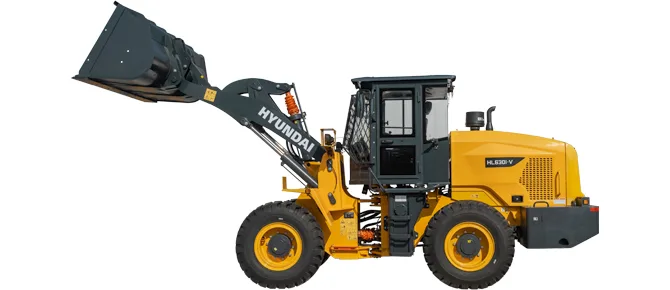
The mining cycle does not end at excavation. Material has to be moved, stockpiled, loaded or fed into downstream processes. This creates a different set of requirements for wheel loaders. The HL630I-V is designed for these material-handling applications within the broader mining ecosystem. Its intelligent hydraulic system and load-sensing technology are designed to manage hydraulic demand according to the operating requirement. Multiple operating modes and engine-management functions further support the balance between machine response and operating efficiency. For an experienced fleet operator, the value of a wheel loader is not simply its ability to move material quickly. It is its ability to repeat that performance efficiently, whether the machine is working at a stockpile, loading trucks or supporting material-handling operations. That is where the HL630I-V fits into the larger productivity picture.
Perhaps one of the most significant changes in heavy equipment is happening away from the machine itself. It is happening in the data. Mining companies now have access to information that can provide a much clearer understanding of equipment behaviour. Fuel consumption, idle time, utilisation, operating hours and machine health can all contribute to a more informed approach to fleet management. HD Hyundai’s Hi-TRACK and Hi-MATE platforms are part of this connected approach. The important point is not simply having access to data. The real value comes from using it to make better operational decisions. If a machine is spending too much time idling, there may be an opportunity to improve utilisation. If fuel consumption changes significantly, operating practices can be examined. If machine-health information indicates a potential issue, maintenance can potentially be planned before it develops into a larger interruption. This is gradually changing maintenance philosophy from “repair when required” to “understand, plan and intervene.” For mining operations, where equipment availability has a direct commercial impact, that shift can be significant.
There is also a tendency to talk about connected machines as though technology alone creates efficiency. It does not. The operator remains one of the most important variables in the equation. Mining operators work long shifts and handle equipment in environments where awareness is critical. Their ability to maintain consistent cycles has a direct influence on machine output. This makes cabin design and operator ergonomics more than a comfort feature. Good visibility, intuitive controls, comfortable seating, effective climate control and reduced vibration can help operators remain focused throughout the shift. The relationship is straightforward: a machine can only perform as effectively as the person operating it can control it. This is particularly relevant for large machines such as the HX520L, where precise control and awareness are essential around other heavy equipment.
There is another aspect that experienced customers tend to look at closely: what happens after the machine arrives at the site? A machine’s long-term economics depend on much more than its initial purchase price. Parts availability, service response, technical knowledge, maintenance planning and operator training all influence lifecycle performance. This is why aftermarket capability has become an increasingly important part of the equipment proposition. Hyundai’s Takshashila training programme combines classroom instruction with hands-on learning in machine operation, maintenance, diagnostics and telematics. Initiatives such as operator camps and Parts Melas extend this engagement by providing practical guidance on maintenance, machine operation, fluid management and seasonal requirements. For customers operating equipment in remote or high-production environments, this support can make a meaningful difference. The objective is ultimately simple: keep the machine productive throughout its working life, not just during its warranty period.
The next stage of India’s mining growth will place greater demands on equipment. Higher production targets will need to be balanced with fuel costs, environmental considerations, skilled manpower availability, safety requirements and pressure to maximise asset utilisation. This will make equipment selection increasingly strategic. The HX520L addresses the requirement for high-capacity excavation in demanding mining applications, while the HL630I-V supports material handling and loading. Connected technologies provide greater visibility into machine performance, while training and aftermarket support help customers sustain that performance.
Taken together, these elements point towards a broader change in the industry. The future mining fleet will not be judged only by how much power it has. It will be judged by how effectively that power is converted into tonnes moved, hours worked, fuel saved and downtime avoided. That is a much more demanding definition of performance. And it is perhaps the most important shift taking place in mining today: the move from choosing machines based on what they can do, to evaluating them based on the value they can consistently deliver.
For more details visit: https://in.hd-hyundaice.com