
Tunnel Boring Machines: Transforming India’s Infrastructure Landscape
India is witnessing one of the largest infrastructure development programs in the world. With rapid urbanization, increasing population density, and the need for sustainable transportation and utility networks, underground construction has become an essential component of modern infrastructure. At the heart of this transformation is the Tunnel Boring Machine (TBM) an engineering innovation that has revolutionized the way tunnels are constructed.
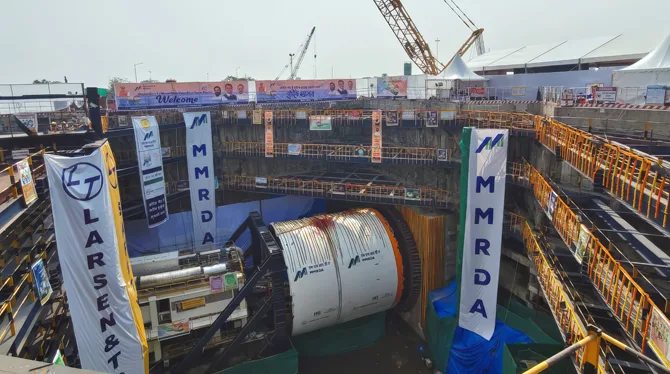
A Tunnel Boring Machine is a highly specialized piece of equipment designed to excavate tunnels through varying geological conditions while simultaneously installing tunnel lining segments. Unlike conventional drilling and blasting methods, TBMs provide a safer, faster, and more precise method of tunnelling, particularly in densely populated urban environments. Their ability to minimize surface disruption, reduce vibration and noise, and maintain high levels of safety has made them the preferred choice for large scale underground infrastructure projects.
India’s adoption of TBM technology has accelerated significantly over the past decade. Major metro rail systems in cities such as Delhi, Mumbai, Bengaluru, Chennai, and Kolkata have relied extensively on TBMs to construct underground corridors beneath some of the country’s busiest commercial and residential areas. Beyond urban transit, TBMs are now playing a critical role in railway tunnels, highway projects, hydroelectric developments, water supply systems, sewer networks, and utility corridors.
The impact of TBMs on Indian infrastructure extends well beyond tunnel excavation. They have enabled the execution of projects that would have been technically challenging or economically unfeasible using traditional construction methods. Underground metro networks have reduced traffic congestion, lowered carbon emissions, and improved urban mobility. Similarly, underground utility tunnels have enhanced the reliability of essential services while reducing the need for repeated road excavations.
One of the most significant advantages of TBM technology is safety. Modern machines are equipped with sophisticated monitoring systems that continuously assess ground conditions, cutterhead performance, face pressure, and machine operations. This allows engineers to respond quickly to changing geological conditions while significantly reducing risks to workers and nearby structures. In congested metropolitan areas, where buildings, roads, and critical infrastructure are located directly above tunnel alignments, this level of precision is invaluable.
TBMs have also contributed to the development of a highly skilled engineering ecosystem in India. The growing number of tunnelling projects has created opportunities for specialists in mechanical engineering, hydraulics, electrical systems, geotechnical engineering, automation, maintenance, and project management. Indian companies are increasingly participating in refurbishment, maintenance, spare parts manufacturing, and technical support, gradually reducing dependence on overseas expertise and strengthening domestic capabilities.
Despite these advancements, challenges remain. India’s diverse geological conditions, from soft marine clay to hard rock and mixed ground requires careful machine selection and project planning. High capital investment, specialized maintenance requirements, skilled manpower, and timely availability of spare parts continue to influence project execution. However, with increasing experience and continued investment in indigenous capabilities, these challenges are steadily being addressed.
Looking ahead, the future of TBM technology in India is exceptionally promising. Ambitious infrastructure initiatives, including new metro systems, high-speed rail corridors, underground expressways, water transfer schemes, and smart city developments, will continue to drive demand for advanced tunnelling solutions. As India strives to build resilient, sustainable, and world-class infrastructure, Tunnel Boring Machines will remain a cornerstone of this progress.
The evolution of TBM technology represents more than an advancement in construction equipment, it symbolizes India’s commitment to engineering excellence, technological innovation, and sustainable development. By enabling complex underground infrastructure with greater efficiency, safety, and environmental responsibility, TBMs are helping shape the foundation of a modern India prepared to meet the demands of future generations.