
We will continue to enhance our portfolio with offerings that keep our customers’ operations efficient, productive and future-ready
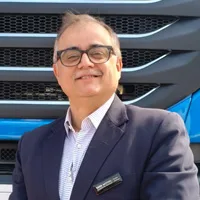
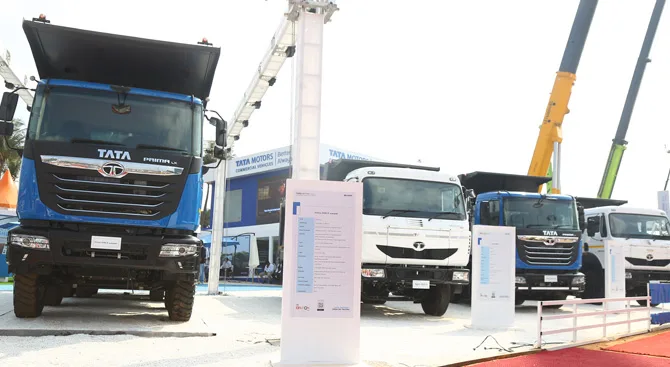
Tata Motors, India’s largest commercial vehicle manufacturer, unveiled a diverse portfolio of advanced solutions at EXCON 2025, to support the nation’s rapidly expanding infrastructure and construction sector. In an exclusive interview to CONSTRUCTION OPPORTUNITIES, RAJESH KAUL, VICE PRESIDENT & BUSINESS HEAD – TRUCKS, TATA MOTORS LTD., speaks on his company’s new launches at Excon 2025, technologies and a lot more.
Tell us on the new products launched at Excon 2025
Before launching any product, we undertake extensive validation, and one such example is the E.28K battery electric tipper, equipped with a 450 kWh battery. Our approach is rooted in localized, application-first deployment, where we manage the entire lifecycle end to end. Designed for operations of around 200 km per day, the vehicle delivers high reliability and comes with built-in telematics that enable real-time performance tracking. Through our customer success centres across dealerships and Tata Motors locations, this allows us to proactively support customers using live vehicle insights.
This electric tipper has been tested and validated in real-world conditions across multiple locations, including North Karnataka, Odisha mines, irrigation projects, and Jharsuguda, giving us confidence in its performance and reliability. The product is the result of years of engineering effort, and with bookings now open, we are seeing a healthy pipeline.
Our journey towards net zero is anchored in alternate fuels, alongside science-based initiatives across our ICE portfolio. In addition to the electric tipper, we continue to expand our CNG offerings. We were the first to introduce CNG-based RMC (ready-mix concrete) trucks, which received an encouraging response. Building on this, we have now launched a 28-tonne CNG tipper, ideal for road construction and intra-city operations, helping reduce emissions in urban and high-pollution zones. With expanding CNG infrastructure, this solution delivers strong range, improved profitability, and a compelling value proposition for customers.
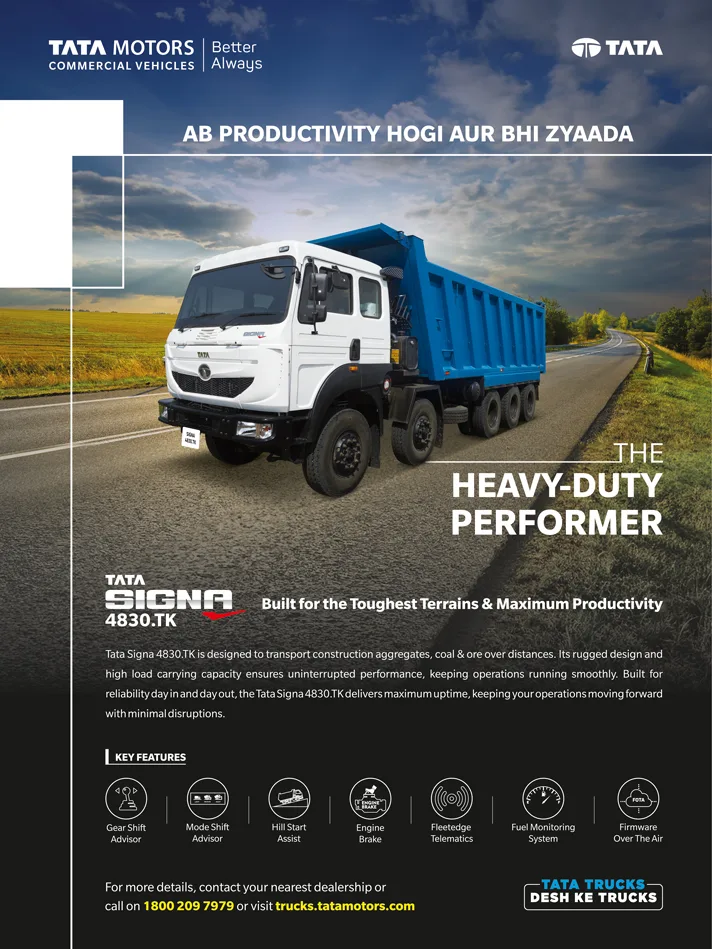
We have also enhanced our Prima and Signa tipper range with higher bucket capacities, enabling customers to carry larger volumes of low-density materials like coal, directly translating to higher earnings. A key highlight is the Prima 3540.K AutoShift mining tipper, developed to meet customer demand for higher power-to-weight ratios in BS6 applications. Designed for mining, aggregates, and infrastructure projects, it supports multiple body options, including rock sandwich floor bodies and box bodies, to suit diverse operating needs.
Overall, Tata Motors continues to lead the tipper and construction segment by offering a comprehensive portfolio—spanning alternate fuels, higher productivity, AutoShift technology, and application-specific mining solutions—ensuring value for customers across use cases.
What are the technologies embedded in your trucks & tippers
Our trucks and tippers are built keeping safety, productivity, and profitability at the core. On the safety front, we offer advanced technologies such as driver monitoring systems, reverse cameras, lane departure warning, and other ADAS features, progressing towards Level 2 capabilities. Some of these are regulation-driven, while others are deliberate value additions, reflecting how the Indian market is rapidly maturing.
Over the years, customer expectations have evolved significantly, from being largely price- and acquisition-focused to becoming more performance-oriented. Today’s customers are looking beyond just the initial cost; they are focused on how a vehicle performs over its lifecycle. As an OEM, we see safety as foundational, productivity as an enabler, and profitability as the ultimate outcome.
This shift has created a new category of customers we call performance seekers – customers who expect technology-led solutions that improve uptime, efficiency, and overall output. By embedding these advanced technologies, we help them achieve higher productivity, which directly translates into better profitability across their operations.
Tell us on the gensets launched
We have launched a new range of compact gensets designed to make uninterrupted power more accessible and affordable. The portfolio includes smaller-capacity gensets with a 700 cc engine, covering the 10 to 35 kVA range, as well as a 1,500 cc option for higher requirements.
Typically, gensets are perceived as large, heavy, and capital-intensive investments. That’s exactly what we are challenging with this launch. Our focus is on compact, fuel-efficient, and cost-effective gensets that ensure business continuity without placing a heavy financial burden on customers. With better fuel efficiency, lower operating costs, and a smaller footprint, these gensets address a clear and growing need for reliable, uninterrupted power in a more practical and economical way.
What’s the pricing of the gensets that are starting now and which segment will be developing?
These gensets are primarily aimed at shop owners, small business establishments, showrooms, and residential users, including individual homes and bungalows. The focus is on smaller, affordable solutions that meet everyday power-backup needs without high upfront investment.
As this was the first unveiling of the product, the pricing will be announced soon.
Your thoughts on scrappage & recycling?
Tata Motors has set up registered vehicle scrapping facilities (RVSF), under its Re.Wi.Re (Recycle With Resppect initiative) across across 11 locations in the country. Recently, three of them were inaugurated together.
At these Re.Wi.Re centres, vehicles are dismantled through a structured, multi-stage process. Components such as oil, wiring harnesses, axles, and precious metals including palladium, rhodium, and aluminium are carefully separated. Sheet metal is sent for reuse through furnaces, while recyclable materials are channelled back into the ecosystem. The objective is clear—to maximise reuse and minimise waste at every stage.
For fleet owners, especially those operating hundreds or thousands of vehicles, this approach has created strong interest. End-of-life vehicles are no longer treated as junk, but as assets with recoverable value. As part of this initiative, Tata Motors also offers additional incentives, including up to 3% benefits on heavy commercial vehicles, encouraging customers to transition from older, high-emission vehicles to new BS6 OBD2-compliant models.
While momentum is building, there is still work to be done. Our endeavour is to have at least one Re.Wi.Re centre in every state to begin with and expand further. Higher resale value, rising maintenance costs of ageing vehicles, and government-led scrappage policies together make a strong case for renewal. Tata Motors sees itself as a catalyst in this transition, working alongside the government and the industry to accelerate the shift towards cleaner, more efficient mobility solutions.
You spoke about maintenance and new technology and we have an EV today. How is Tata Motors engineered like with the downtime when it comes to EVs as opposed to an ICE vehicle? So, how is the downtime kept reduced in the EV so that the operators do not face that loss when the charging is taking place or even during service?
At the core of our engineering approach—whether EV or ICE—is cost management through uptime. Ultimately, profitability comes down to revenue minus cost. We work on both sides of that equation – reducing costs by lowering downtime, and increasing revenue through higher reliability, better torque, more trips, and uninterrupted operations.
On the cost side, Fleet Edge telematics plays a critical role. Today, we have over 900,000 connected vehicles, generating rich, real-time data across applications, routes, mines, and duty cycles. This data is continuously analysed by our engineers to understand vehicle behaviour in specific operating conditions and course-correct proactively, before an issue leads to breakdown or stoppage.
This enables us to move from reactive servicing to predictive and proactive maintenance. We can alert drivers and fleet managers in advance, well before the next service interval, ensuring corrective action can be taken early. The outcome is fewer workshop visits, longer time between services, and significantly higher uptime.
In fact, for several applications, we are confident enough to offer uptime assurance commitments, even putting them into formal contracts with customers. This is always application-specific as it requires a deep understanding of the customer’s business, route, payload, operating cycle, and usage intensity. It cannot be generic.
Sectors like e-commerce are extremely demanding, with tight delivery timelines and thin margins. When fleets operate across long corridors with committed delivery windows, even small downtime impacts profitability.
With Fleet Edge insights, dedicated service hubs, single points of contact, and proactive monitoring, similar to how airline networks manage handovers, we are able to target uptime levels of 98–99%.
For EVs in particular, this predictability is critical. Charging cycles, service planning, and route optimisation are all engineered around keeping the vehicle on the road as much as possible. By combining connected technology, predictive insights, and application-led support, we ensure customers have predictable uptime, controlled costs, and confidence in profitability—which ultimately solves the downtime concern.
Your feedback on Excon 2025?
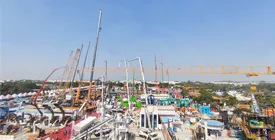
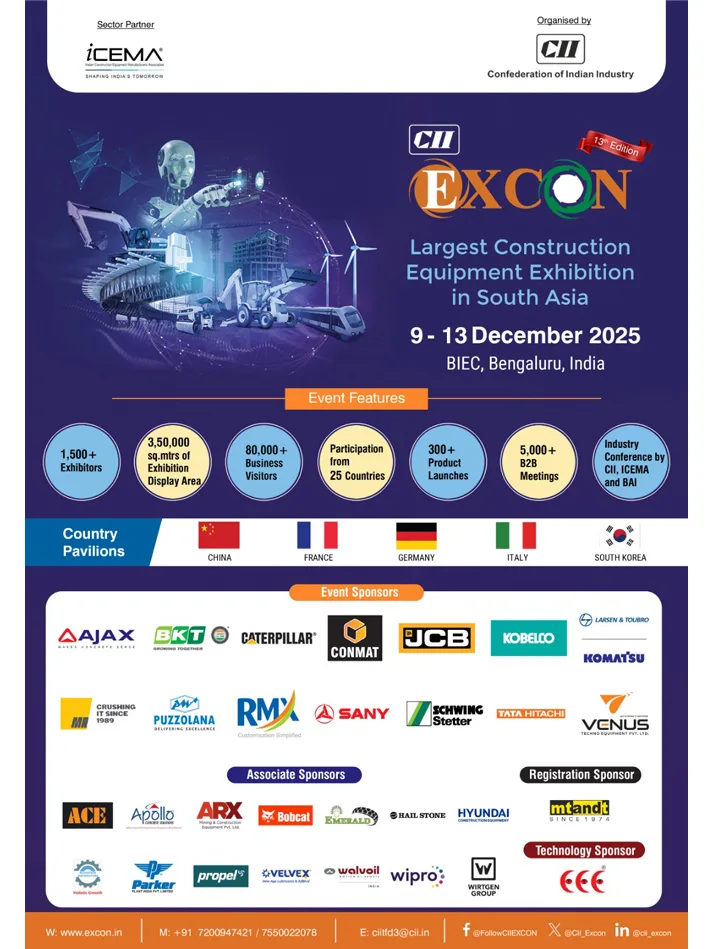
EXCON is a platform that brings together all the key stakeholders of the construction and infrastructure ecosystem. It plays an important role in shaping the future of infrastructure in the country, given the quality and seriousness of participation it attracts.
For Tata Motors, this makes EXCON an essential forum for engagement. That is why we ensure a strong presence at the show every time—to showcase our solutions, engage with customers and partners, and be part of conversations that are driving the next phase of India’s infrastructure growth.