
THE SMART EQUIPMENT REVOLUTION: From Iron to Intelligence
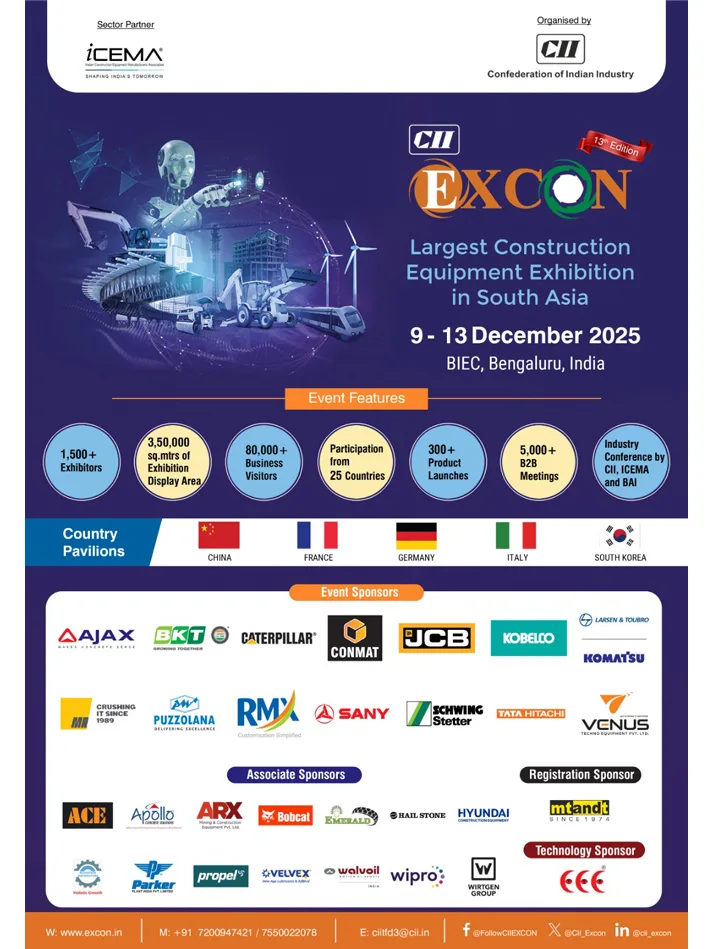
India’s construction ecosystem is standing at the edge of a historic shift—one that is rapidly transforming the very identity of machines that build the nation. The era of pure mechanical might is giving way to a world where intelligence is the true horsepower. Sensors, telematics, automation, predictive diagnostics, alternative fuels, and AI-infused control systems are rewriting the role of equipment across highways, metros, mining, and urban infrastructure. And this inflection point will come into clear focus at EXCON 2025 — a global meeting ground for next-generation equipment. This year’s edition will serve as a pivotal launchpad, bringing together India-ready and internationally engineered digital innovations that collectively reflect the industry’s shift from Iron to Intelligence…….. writes, PRERNA SHARMA.
India’s construction-equipment industry enters 2025 at a defining moment—poised between short-term cyclical pressures and a deeper structural transformation reshaping global infrastructure. On the surface, the domestic market appears tempered: election-year capex delays, moderated earthmoving demand, and contractors postponing high-value purchases amid uneven cashflows. Yet beneath this temporary slowdown is a far more consequential shift—one that positions India to emerge as a global hub for smart, connected, and future-ready machines. EXCON 2025 will be the most visible expression of this transition.
The long-term infrastructure pipeline remains exceptionally strong. Mega programs—from freight corridors and logistics hubs to metro networks, airports, expressways and high-speed rail—continue to generate sustained demand. But the nature of this demand is evolving. Contractors, faced with tighter timelines, rising fuel costs, stricter emission norms, and digital compliance requirements, are now prioritizing machines that deliver productivity intelligence rather than just mechanical power.
For the first time, Indian fleet owners are directly linking digital capability with cost efficiency and project velocity. What began as basic telematics adoption has matured into deep engagement with fuel-mapping, operator behavior analytics, predictive maintenance, and idle-time optimization. Simultaneously, India’s exports have surged, proving that domestic machines—once positioned as value alternatives—can now compete globally on reliability, emissions compliance, and digital maturity.
This momentum is accelerating the localization of critical electronics: smart displays, sensors, battery systems, ECUs, and telematics hardware.
India is no longer following the global modernization curve—it is setting a new one. In 2025, the country moves decisively from being a consumer of global technology to a creator of intelligence-led construction equipment, and EXCON will amplify this shift.
Why 2025 Represents a True Inflection Point
2025 is not another year in the CE industry’s growth cycle; it marks a structural inflection shaped by policy alignment, export ambition, rising digital adoption, and technology readiness.
The transition to CEV-V emission norms is triggering innovation that extends well beyond cleaner engines. As OEMs upgrade powertrains, they are simultaneously integrating sophisticated control systems, advanced fuel-management algorithms, and modern digital interfaces. While compliance increases costs, it pushes India into a higher league of manufacturing capability.
At the same time, exporters—posting strong double-digit growth entering FY25—are designing machines for global markets where connected systems, automation-ready platforms, and advanced diagnostics are standard. This external demand is reinforcing domestic transformation. For the first time, the industry is experiencing technology pull, not push, as project owners adopt telematics, automation, operator-assist features, and electric or hybrid platforms for their direct impact on cost, uptime, and lifecycle performance.
Government signaling is also sharper. Ministries and regulators are encouraging electric, hybrid, and alternate-fuel CE platforms to support a cleaner, more efficient infrastructure ecosystem.
The convergence of policy direction, commercial pressure, and global competitiveness is what makes 2025 an irreversible turning point.
The Current CE Landscape
India’s construction-equipment industry is expected to report modest volume growth of 2–4% this fiscal and next—to around 1.45 lakh units—reflecting subdued domestic demand from slower road execution, moderated real estate activity, and higher equipment costs following the January 2025 CEV-V1 rollout. Strong export orders, however, continue to provide critical support. Revenue growth of 6–8% is projected, aided by selective price hikes that partially offset compliance-related cost pressures.
Stable steel prices and robust overseas realizations will ease margin pressure from low-cost imports, restricting operating-margin contraction to ~11% from ~12% last fiscal. Capital-expenditure discipline is expected to keep leverage and credit profiles stable.
Across the industry, sales are driven by roads (40%), mining (25%), real estate (15%), and sectors such as railways, water management, and power. Earthmoving machinery dominates the product mix (~70%), followed by material handling (12%), concrete equipment (10%), road machinery (5%), and material-processing equipment (2%).
Domestic sales accounted for ~90% of FY25 volumes, with exports making up the balance. In the first half of the fiscal, overall volumes dipped 1% year-on-year, offset by a strong 35% export surge. Approximately 1,900 km of roads were completed in the first six months of FY25, compared to ~3,700 km a year earlier, with last year’s performance also affected by an election-cycle slowdown.
Crisil Ratings Senior Director Anuj Sethi notes that road construction—a key demand driver—is expected to moderate to 23–25 km per day this fiscal, compared to 25–27 km in FY25 and 34 km in FY24. Erratic monsoons, stabilizing real estate demand, and higher equipment costs have contributed to slower execution. Faster awards and on-ground progress in the remainder of the fiscal will be essential to support the government’s ~Rs.11-lakh-crore infrastructure outlay.
Revival of domestic demand next year will depend on sustained public spending and stronger private capex. GST rate rationalization has had negligible direct impact, with CE equipment retaining the 18% slab. With domestic demand largely flat, the projected 2–4% volume growth will rely heavily on export momentum.
Crisil Ratings Director Poonam Upadhyay highlights that CEV-V compliance—while increasing costs by 12–15%—has improved product reliability and global acceptability. The 35% export surge in H1 FY25 was led by Africa and Latin America, but the new norms now open pathways to Europe, North America, and Japan. India’s ability to capitalize on these opportunities amid geopolitical realignments will determine the resilience and expansion of its export footprint.
Overall, the industry’s trajectory will hinge on the pace of project awards, mining activity, and export traction. Effective implementation of the infrastructure budget and accelerated field-level execution will be critical to sustaining growth in the coming fiscal.
Smart-Equipment Innovation: The Technology Wave Redefining Indian OEMs
A profound technological shift is underway across India’s construction-equipment landscape, reshaping how machines are designed, operated, and monetized. The first and most visible change lies in the rise of telematics as the central nervous system of modern equipment. What began as a location-tracking accessory has now matured into a decision-making engine. If stats are to go by, the global construction equipment telematics market was valued at US$6.92 billion in 2024. The market is expected to grow from US$7.76 billion in 2025 to US$20.59 billion in 2034, at a CAGR of 11.5% according to latest report published by Global Market Insights Inc. Indian OEMs are offering real-time insights into fuel consumption, operator efficiency, load cycles, idle-time patterns, and early-warning alerts that prevent catastrophic breakdowns. The machine is no longer an isolated piece of iron; it is a data node contributing to site-wide productivity intelligence. The construction equipment telematics segment is moving from fundamental GPS and fleet tracking solutions to software-enabled predictive maintenance, fuel management, and operational efficiency solutions. Over-the-air (OTA) updates are helping manufacturers and telematics providers deliver additional functionality without replacing hardware, which resulted in maintenance cost avoidance of 15-20% in annual expenditures. For example, in March 2025, Caterpillar launched a fleet management solution with AI-enablement of predictive maintenance that reduced unplanned downtime by 25% for rental fleets.
Adoption of AI, IoT, and cloud-based telematics platforms leveraging data analytics are increasing in a data-driven ecosystem of real-time decision making. Major manufacturers like Komatsu and Volvo are incorporating telematics dashboards that analyze machine and operational data through machine learning algorithms, providing fuel savings of 10-15%, on average, across medium to heavy construction equipment.
Parallel to this transformation is the accelerated rise of AI-driven operator-assist technologies, which are redefining how machines interact with both operators and the job site environment. While fully autonomous construction equipment remains a long-term aspiration for India’s diverse and unpredictable work conditions, semi-autonomous capability is rapidly becoming mainstream. Features such as auto-dig systems, 2D/3D grade control, hydraulic load sensing, obstacle and collision avoidance, fatigue and distraction monitoring, and geo-fenced safety alerts—once limited to top-tier models—are now cascading into mid-range and even compact categories. These systems don’t merely enhance comfort; they compensate for operator skill gaps, reduce rework, improve fuel efficiency, and elevate safety at a time when job sites are becoming denser, more regulated, and increasingly productivity-driven.
The second major frontier is electrification, which is moving from global aspiration to early-stage on-ground adoption in India. Battery-electric compact excavators, skid-steer loaders, and mini loaders are finding strong use cases in metro rail corridors, tunnel projects, airport expansions, industrial plants, and urban redevelopment—environments where low noise, zero emissions, and minimal ventilation load are operational imperatives. Even as OEMs scale electric platforms, the industry is embracing transitional energy pathways. Solutions running on bio-CNG, HVO, hydrogen-enriched fuels, and hybrid powertrains are being piloted to ease the shift for contractors who must balance sustainability goals with cost sensitivity and predictable machine availability. These hybrid and alternate-fuel machines represent a practical bridge between diesel-dominated fleets and the fully electric future. The fourth—and arguably the most strategic—shift is the localization of high-value, technology-intensive components, a movement that is reshaping India’s role in global construction-equipment supply chains. Batteries, electric motors, advanced sensors, ECUs, digital HMI displays, telematics controllers, AI-enabled cameras, and autonomous-support hardware are now being manufactured or assembled locally at unprecedented scale. This deep localization not only reduces cost and protects OEMs from import volatility; it also positions India as a design and manufacturing hub for next-generation smart machinery. As global OEMs integrate India into their R&D and sourcing networks, the country is moving from being a value-competitive market to a source of innovation, components, and export-ready intelligent machines.
Business Model Evolution: Moving Beyond Iron to Intelligence
The smartest manufacturers and rental companies recognize that the business of construction equipment is rapidly shifting from ownership economics to performance economics. The traditional model—sell a machine, provide service support, and hope for repeat orders—is being replaced by a more nuanced and technology-centric approach.
Uptime guarantees and performance-linked service contracts are becoming central to commercial negotiations. Contractors are increasingly asking for machines that come with assured availability, predictable maintenance schedules, and remote diagnostics support that minimizes project disruptions. This transforms OEMs into partners responsible not only for manufacturing but for ensuring lifecycle reliability.
The rental industry is undergoing an equally significant transformation. Larger rental firms are consolidating fleets, standardizing telematics systems, and using analytics to optimize equipment dispatch, maintenance intervals, and machine utilization. Their purchasing criteria have shifted from initial machine cost to total cost of ownership, digital compatibility, and fuel-efficiency intelligence, accelerating the adoption of smarter machines. Exports are creating another layer of transformation. As Indian OEMs build machines for regions with stricter emissions and safety regulations, they are elevating the overall technology baseline of the domestic market. And with smart machines comes a new revenue engine—skill development. OEMs are investing in operator academies, simulator-based training, and remote learning systems that prepare the workforce for a digitally enhanced fleet. In this new ecosystem, the machine, the data, and the human skill evolve together.
Strategic Momentum Heading into EXCON 2025
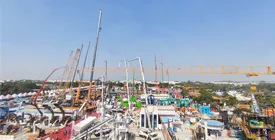
As the industry moves closer to EXCON 2025, the momentum behind smart-equipment adoption is intensifying across every stakeholder group. The exhibition is expected to move decisively beyond static displays, transitioning into a dynamic showcase of intelligent, connected, and electric machines actively demonstrating their capabilities in real-world conditions. Live telematics dashboards, AI-enabled safety systems, remote-operation consoles, and energy-efficient electrified fleets will transform the event into a working laboratory for the future of construction.
The international presence at EXCON is also set to grow, driven by India’s rising profile as a competitive export hub. Foreign buyers, technology partners, and investors are viewing EXCON 2025 as a window into India’s evolving manufacturing capabilities—particularly in areas like battery systems, electric drivetrains, precision hydraulics, and autonomous-assist software. This global engagement, combined with India’s cost advantage and rising technological maturity, positions the country to play a decisive role in global supply chains for smart construction equipment.
Policy conversations will add another layer of importance. EXCON has traditionally been the forum where emission norms, digital compliance directives, safety frameworks, and localization strategies are debated and signaled. In 2025, these discussions carry even greater weight, as the industry seeks clarity on incentives for electric equipment, pathways for CEV-V implementation, and national skilling standards for operating digitally advanced machines. The convergence of technology demonstrations, global engagement, and policy signaling makes EXCON 2025 the most influential edition in the exhibition’s history.
A Sneak Peek into What’s in Store @ EXCON 2025
EXCON 2025 is shaping up to be a landmark edition, with leading OEMs and component manufacturers preparing a wave of new launches, upgraded models, and India-focused innovations. As the industry accelerates toward smarter, cleaner, and more connected equipment, companies are gearing up to use this platform to unveil their most important advancements of the year. From next-generation machines and digital ecosystems to breakthroughs in electrification, localization, and sustainability, EXCON 2025 will offer an early look at the technologies and product ranges that will steer the construction and infrastructure sector in the year ahead. Here’s what some of the industry’s leading players are preparing to showcase.
Volvo Construction Equipment is gearing up for a high-impact presence at EXCON 2025, reinforcing its leadership in sustainable, intelligent, and future-ready machinery. Under the guidance of Dimitrov Krishnan, Managing Director, Volvo CE India—who also serves as Chairman of EXCON 2025—the company is set to highlight how global innovation and India-focused engineering are converging to shape the next era of infrastructure development. Volvo CE will showcase its newest range of construction and mining equipment, including models designed specifically for India’s fast-evolving project conditions. A key attraction will be the company’s advanced zero-emission solutions, demonstrating Volvo’s strong global commitment to electrification, decarbonization, and high-productivity technologies. Through its participation, Volvo CE aims to underscore how cutting-edge engineering, sustainability leadership, and deeper digital integration are redefining performance benchmarks for the Indian CE industry.
JCB India is set to make a strong, future-forward statement at EXCON 2025, reflecting its commitment to technology leadership, sustainability, and nation-building. As highlighted by Deepak Shetty, CEO & MD and Co-Chairman of EXCON 2025, the construction equipment industry is undergoing a fundamental transformation—one driven by digitalization, next-generation productivity, and India’s rising global competitiveness.
At the event, JCB will spotlight its newest range of connected, intelligent, and low-emission machines designed for enhanced productivity, safety, and operating efficiency. The company is also expected to showcase advancements in alternative fuels, electric and hybrid platforms, and export-ready technologies aligned with global CEV-V standards. With India’s CE sector scaling up in both ambition and capability, JCB’s presence at EXCON 2025 underscores its role in shaping a more efficient, sustainable, and globally competitive construction ecosystem.
SCHWING Stetter is set to make one of its most comprehensive showcases yet at EXCON 2025, unveiling a next-generation product lineup built around sustainability, digitalization, and high-efficiency concreting technologies. The company will present its full range of solutions—including concrete batching plants, boom pumps, truck mixers, shotcrete pumps, recycling plants, and C&D waste recycling systems—demonstrating its leadership across the entire concreting value chain.
A major focus will be on eco-friendly innovations that reduce waste, cut carbon emissions, and advance precast construction. With integrated digital controls, smart monitoring, and automation-ready features, SCHWING Stetter’s exhibit reinforces its alignment with India’s Smart, Safe, and Sustainable Construction agenda.
Tata Hitachi will use EXCON 2025 to highlight its transition toward cleaner, more intelligent, and customer-centric construction equipment. The company’s pavilion will feature its latest generation of excavators, compact machines, and upgraded models engineered for higher productivity, operator comfort, and lower environmental impact. Beyond equipment, Tata Hitachi will spotlight its broader sustainability initiatives—from renewable-energy-powered manufacturing to circularity efforts and optimized green logistics. The display strongly reflects the company’s long-term commitment to “Building the Nation Responsibly,” with solutions that balance performance, digital capability, and environmental stewardship.
For BKT, EXCON 2025 is a strategic platform to reinforce its position as a global leader in off-highway tyres and a trusted mobility partner for India’s infrastructure expansion. The company will showcase its latest portfolio of All-Steel Radial and specialized OTR tyres, purpose-built for India’s demanding construction and mining conditions.
Beyond new products, BKT aims to deepen engagement with contractors, OEMs, and ecosystem partners seeking durable, sustainable, and locally manufactured tyre solutions. The company’s presence underscores its broader mission: supporting India’s construction, mining, and real estate growth with tyre technologies that enhance safety, productivity, and lifecycle value.
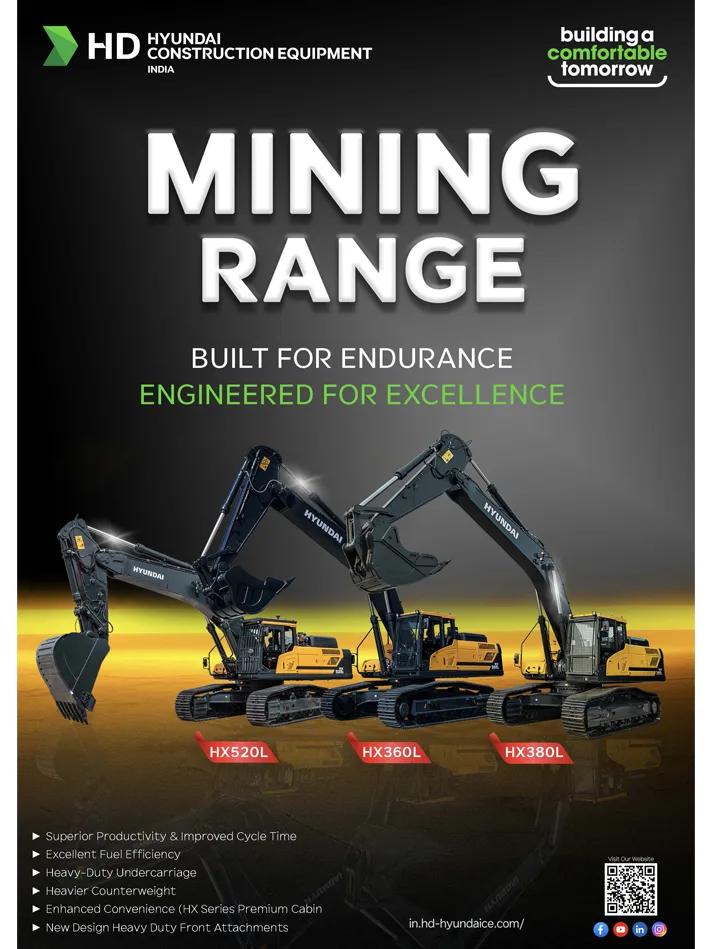
HD Hyundai Construction Equipment India is taking a decisive step toward industry leadership with the launch of its all-new Smart Excavator Series, strategically unveiled just months ahead of EXCON 2025. Speaking about the launch, Joydeep Baksi, Associate Vice President – Marketing and Sales, HD Hyundai Construction Equipment India, highlighted the company’s foresight and market-driven approach. “We have noticed a clear shift in demand, backhoe loaders are gradually being replaced by excavators as project complexity increases and efficiency expectations rise. Our new Smart Excavator Series is built around three key pillars: productivity, operator comfort and performance efficiency. Launching ahead of EXCON gives us the opportunity to gain valuable customer feedback and build momentum well before the exhibition,” he explained.
Baksi emphasized that this is not just a product launch, but a step toward Hyundai’s long-term vision of market leadership in the excavator segment.
The new Smart Excavator Series marks the beginning of a new era of innovation for the company, with more advanced models and technologies expected to be unveiled at EXCON 2025. “We are not just participating in the market; we are shaping its future,” he added.
Hyundai’s focus on technological excellence continues to set it apart. The company is actively working on integrating artificial intelligence (AI) and automation technologies into its construction equipment lineup. While details remain under wraps, Mr. Baksi revealed that development is well underway and will soon transform how excavators interact with operators and job sites, enhancing predictive performance, operational safety and data-driven decision-making.
LiuGong is expected to showcase a range of eco-friendly products, with a particular focus on battery-electric vehicles (BEVs) like the 4280DE electric motor grader and the DR50CE electric mining truck. They will also highlight their new line of diesel-powered equipment, such as the BS V engine-equipped compactors and graders, which meet stricter emission standards.
At EXCON 2025, ACE will showcase its latest range of intelligent, high-efficiency cranes, material-handling equipment, and construction machinery designed for enhanced safety, productivity, and reliability. The company’s exhibit will highlight advancements in digital interfaces, telematics integration, and operator-focused design—reflecting ACE’s continued push toward smarter, more future-ready solutions for India’s evolving jobsite needs.
Escorts Kubota will present its updated line-up of Cranes, Backhoe Loaders, Mini Excavators, and Compactors, featuring new technology upgrades, enhanced operating features, and expanded variants. The showcase will highlight the company’s ongoing efforts to deliver machines that offer higher productivity, improved efficiency, greater safety, and long-term durability for diverse jobsite requirements.
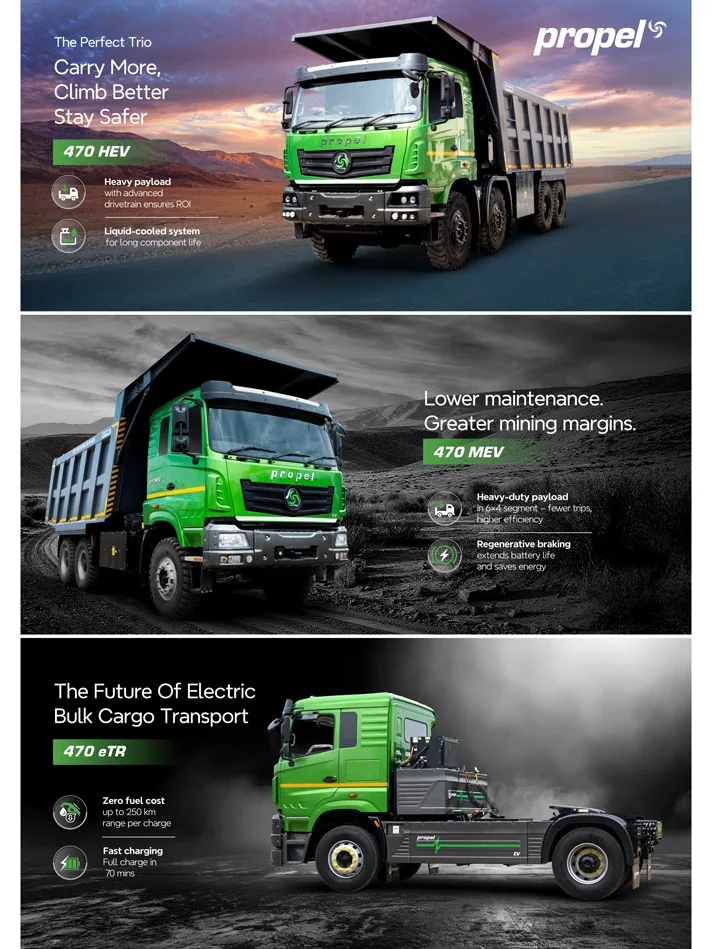
Propel Industries will be displaying its latest range of crushing and screening equipment, along with its EV trucks and trailers that reflect the company’s focus on productivity, sustainability, and performance. These innovations represent Propel’s vision of delivering world-class, energy-efficient technologies tailored for the evolving needs of the industry.
Puzzolana will present its latest innovations in crushing, screening, and material handling technologies, including newly engineered equipment designed to deliver higher productivity, energy efficiency, and sustainability. Their EXCON showcase will feature next-generation machines, modular solutions, and technology upgrades aligned with global standards for quarrying, mining, and infrastructure development. The company also intends to highlight its sustainable manufacturing capabilities and future-ready product ecosystem built for Indian and international markets.
Kobelco is set to make a powerful statement at EXCON 2025 with its purpose-driven philosophy GIST: Globalization, Inclusivity, Sustainability, and Trust — which enriches Kobelco’s business approach guided by market needs and customer delight. These four pillars define the company’s journey, celebrating global outreach, empowering every voice, safeguarding the environment, and building trust. Visitors can witness the next-generation range of machines along with the Japanese little master SK80 excavator, a symbol of precision, efficiency, and versatility. The display will also feature Special Solutions comprising advanced attachments, certified used machines, and reliable after-sales technologies.
SANY India will showcase its newest range of advanced, energy-efficient, and digitally connected equipment designed for construction, mining, and infrastructure applications. The display will highlight the company’s continued push toward greater localization, sustainability, and smart technologies, reflecting SANY’s role in strengthening India’s position as a global manufacturing hub. Through its latest “Chariots of Development,” SANY aims to demonstrate how its machines are engineered to support high-growth national infrastructure programs and contribute to the broader vision of a future-ready, Viksit Bharat.
EXCON as the Poised Platform
India’s construction-equipment sector is undergoing a decisive shift from machines defined by steel, hydraulics, and horsepower to machines defined by data, intelligence, and sustainability. The pressures and opportunities of 2025—rising global exports, advancing emission norms, digital acceleration, and the emergence of electric and AI-assisted platforms—have created a rare moment where the industry’s hardware and software revolutions align.
In this transformative year, EXCON 2025 stands poised as the platform where this shift becomes visible, validated, and commercially accelerated. It will serve as the definitive stage where India showcases its readiness for smart, connected, and globally competitive construction equipment; where policymakers and industry leaders set the direction for the next decade; and where international buyers, technology partners, and OEMs converge to shape the future of infrastructure machinery. More than an exhibition, EXCON 2025 will be the moment where India signals to the world that its machines are not just built with iron—they are powered by intelligence, innovation, and global ambition.
Fast Facts
- In FY25, the construction equipment industry demonstrated remarkable resilience, achieving a 3.3% growth in total sales, reaching 1,40,191 units, while domestic sales rose by 2.7% to 1,26,961 units.
- By equipment type, earthmoving equipment captured 57.10% of the Indian construction equipment market share in 2024; road construction machinery is projected to expand at a 10.23% CAGR through 2030. By drive type, diesel equipment held 95.15% of the Indian construction equipment market size in 2024, while electric/hybrid models are advancing at a 16.21% CAGR to 2030. By end-user, infrastructure projects commanded 43.25% of the Indian construction equipment market size in 2024; mining is the fastest-growing user segment at an 11.11% CAGR to 2030.
- By power output rating, the 101-200 HP class led with a 38.10% share of the Indian construction equipment market in 2024, whereas the >400 HP class is forecast to rise at a 12.22% CAGR.
- By ownership model, contractor-owned fleets dominated with a 72.15% share in 2024; rental fleets are growing at 13.23% CAGR through 2030.
- By region, South India led with a market share of 32.50%, whereas the North-East India projected to expand at a 13.20% CAGR to 2030.
- These robust performance indicators, coupled with upcoming government infrastructure projects, and the industry’s focus on innovation, sustainability, and skill development, underscore the critical role of EXCON 2025 as a premier

“India’s CEV sector today is not just expanding in scale, but also transforming in character—embracing technology, sustainability, and innovation at its core. Efficiency, digital integration, safety, and environmental stewardship are now key imperatives shaping product design, manufacturing, and operations. The industry’s role has evolved from being a supplier of machines to becoming an enabler of sustainable infrastructure and a partner in India’s broader economic progress. The EXCON 2025 theme mirrors the direction in which the entire ecosystem is moving—towards greater productivity, equitable growth, and deeper stakeholder collaboration ensuring the sector remains competitive in the evolving global landscape. As we gear up for Viksit Bharat, events like this reaffirm that our industry’s future is not just about building structures, but building a stronger, more connected India.”
Deepak Shetty, President-ICEMA, Co-Chairman – Excon 2025, CEO & Managing Director, JCB India, South Asia, Africa (East) Member, JCB Group Executive

A major highlight of our participation this time is EarthBrain, Komatsu’s Smart Construction ecosystem that connects machines, people and jobsites in a single digital environment. By using drone surveys, IoT sensors, 3D terrain models, machine data and AI-based analytics, EarthBrain creates a digital twin of the jobsite and helps infrastructure development companies plan more accurately, monitor work in real time, optimise material movement and improve safety. One of its most impactful capabilities is secure remote operation. At EXCON 2025, visitors can experience this by operating a Komatsu hydraulic excavator located in Japan or another remote jobsite thousands of kilometres away, directly from our stall, which clearly demonstrates how future worksites can be managed more safely and efficiently.
ARVIND K GARG, ADVISOR TO CHAIRMAN & MD, L&T CONSTRUCTION & MINING MACHINERY, LARSEN & TOUBRO

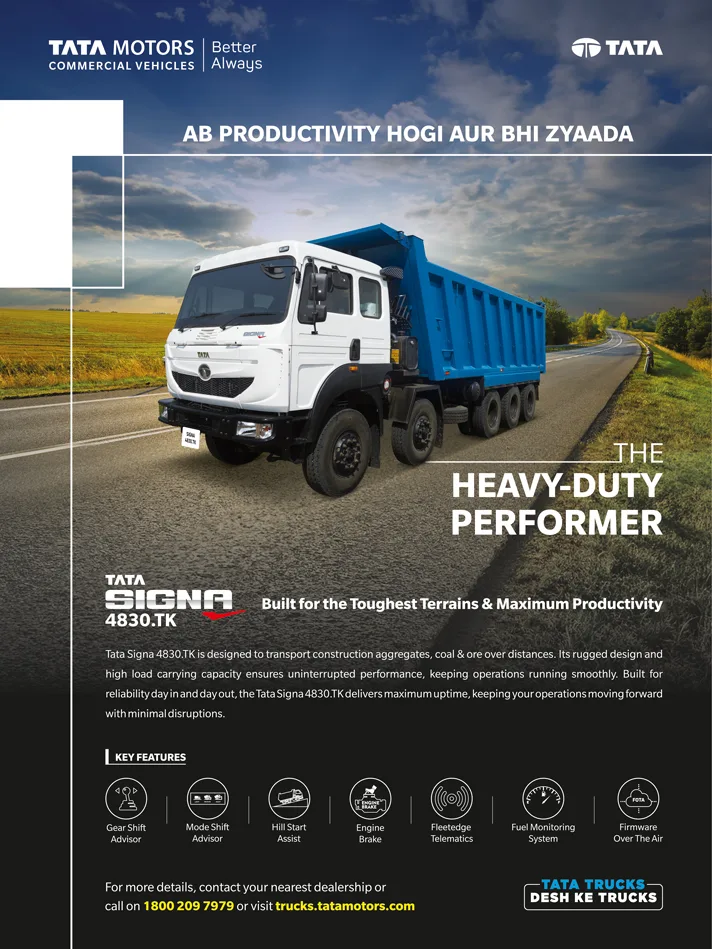
“CII Excon 2025 remains a pivotal platform for Tata Motors Commercial Vehicles, uniting the construction and mining ecosystem. It enables strategic engagement with fleet owners, financiers, and policymakers, while showcasing our engineering leadership and customer-centric innovations. With infrastructure and mining poised for accelerated growth in H2 FY26 and the years ahead, Excon is the ideal stage to present our future-ready solutions—engineered for maximum productivity and aligned with national development priorities.
For over 75 years, we have set benchmarks in construction mobility with India’s most comprehensive tipper portfolio. Our Construck range delivers unmatched durability, productivity, and uptime, powered by advanced powertrains, robust aggregates, and intelligent features like hill-start assist, traction control, and fatigue monitoring. Supported by a nationwide service network, on-site assistance, assured turnaround, and Fleet Edge telematics, we ensure operational continuity and lower total cost of ownership for demanding applications.
Driving India’s decarbonisation journey, Tata Motors Commercial Vehicles leads in sustainable mobility with pioneering work across BEVs, CNG, LNG, hydrogen ICE, and fuel cell technologies.
As Excon approaches, we are ready to showcase solutions that combine technological excellence with deep customer insight—delivering superior performance, safety, and productivity for India’s next phase of infrastructure growth.”
Rajesh Kaul, Vice President & Business Head – Trucks, Tata Motors Commercial Vehicles

EXCON is the largest construction equipment industry expo in South Asia. Volvo CE has been a participant in EXCON from its first edition in 2000 and we have done most of our biggest product launches using this platform. Our showcase in the 2025 edition will feature our latest product offerings for customers in Infrastructure and Mining industries. We will also showcase our latest technology in Zero Emission CE solutions.
Dimitrov Krishnan, Managing Director, Volvo CE India

Schwing Stetter India is set to unveil a massive launch of 17 new products, showcasing a decisive shift toward alternative fuels, electrification, and advanced precast technology, perfectly aligning with India’s Net-Zero and ‘Aatmanirbhar Bharat’ goals.
The focus is heavily on green mobility and operational efficiency in concrete transport:
Fully Electric Truck Mixer (8 Cubic Meter Capacity): The highlight of the show will be the launch of this zero-emission mixer. This fully electric vehicle addresses the critical need for sustainable concrete delivery in congested urban areas, ensuring clean operation without compromising the high-demand 8 cu.m capacity.
CNG Powered Truck Mixers: Expanding the alternative fuel portfolio, Schwing Stetter is introducing a range of mixers running on Compressed Natural Gas (CNG), providing a cost-effective and lower-emission solution for bulk concrete transport.
Hybrid Boom Pump: This innovative pump combines traditional power with an electric motor system, allowing for reduced noise and zero local emissions during stationary pumping operations on-site.
V.G. SAKTHIKUMAR, CMD, SCHWING STETTER INDIA

At Excon 2025, we will be unveiling our new models of cranes, mini excavators, backhoe loaders, and soil compactors, all of which are built with advanced technology that helps save fuel, reduce pollution, and improve overall performance. Every model has been developed to be tough, smart, and eco-friendly, proving how innovation and responsible engineering can make work easier, cleaner, and more efficient. We follow the Make in India approach—building top-quality construction machines with smart features and global innovations. This helps us offer affordable, reliable, and high performance machines that meet the needs of today’s builders. Our machines are also making a mark in Africa, Southeast Asia, and Latin America, where construction is booming, and the demand is for tough, high-performance equipment.
SANJEEV BAJAJ, CHIEF OFFICER, CONSTRUCTION EQUIPMENT BUSINESS DIVISION, ESCORTS KUBOTA LTD

As a long-standing participant, we view EXCON 2025 as a platform to showcase our latest innovations, connect with our OEM partners, and engage directly with end-users across the construction and infrastructure value chain. We anticipate gaining deeper insights into evolving customer requirements, exploring new avenues for collaboration, and further strengthening our brand presence in one of the world’s growing equipment markets.
RISHI RAJ SINGH, HEAD OE SALES, APAC, BALKRISHNA INDUSTRIES LTD

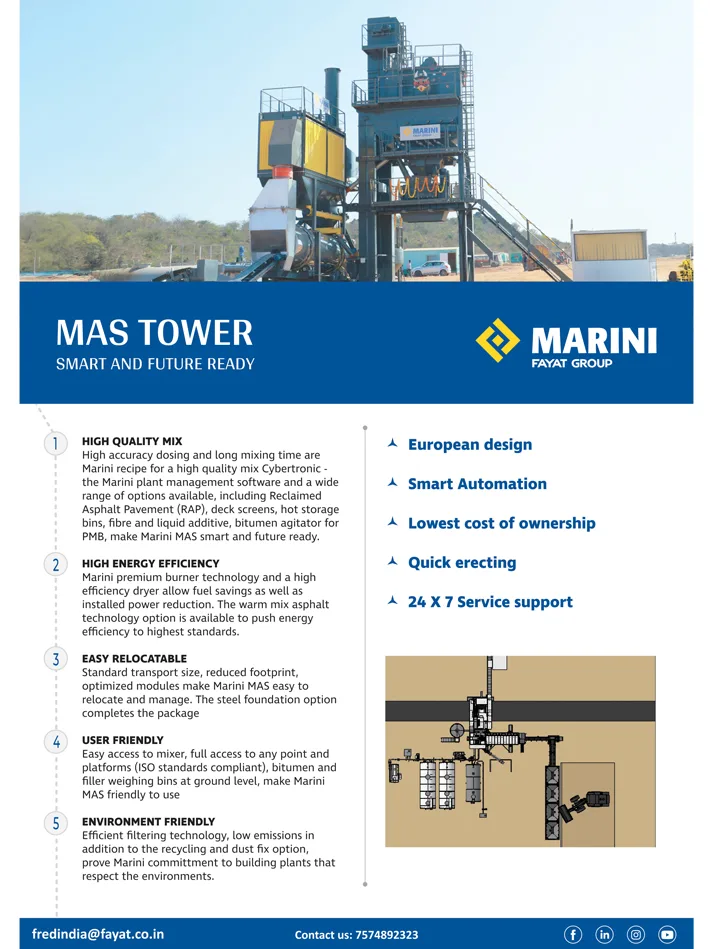
At EXCON 2025, the Fayat Group—represented by its leading brands Dynapac, Marini, BOMAG, and PTC—will showcase a comprehensive portfolio centered on digitalisation, sustainability, and advanced road construction technologies. Dynapac will unveil innovations in intelligent compaction, connected paving, and low-emission solutions, further strengthening its promise of being “Your Partner on the Road Ahead” Marini will present its energy-efficient asphalt production technologies, featuring high recycling capabilities. BOMAG will display its globally acclaimed soil stabilizers, milling machines, and its latest series of soil and asphalt compactors known for their precision, durability, and reliability in demanding environments. PTC will feature its vibro-hammers and foundation engineering solutions designed for metro, bridge, and large-scale civil infrastructure projects. Together, these offerings demonstrate the Group’s strong commitment to future-ready, sustainable, and high-performance infrastructure development.”
VISHWESH RAI, GENERAL MANAGER, FAYAT ROAD EQUIPMENT (FRED) – SALES INDIA

“For Propel Industries, EXCON 2025 is a significant opportunity to showcase our technological leadership and commitment to driving innovation in the construction and mining equipment sector.As a trusted name in the industry, we see this platform as a space to highlight our engineering excellence and the advancements shaping the future of infrastructure development. At this edition of EXCON, we will be displaying our latest range of crushing and screening equipments, along with our EV trucks and trailers that reflect our focus on productivity, sustainability, and performance. These innovations represent Propel’s vision of delivering world-class, energy-efficient technologies tailored for the evolving needs of the industry. Through our participation, we aim to reaffirm our position as a Visionary brand dedicated to building a smarter and more sustainable future for India’s infrastructure.
V. Senthil Kumar, Managing Director, Propel Industries

EXCON 2025 represents a significant milestone for Fayat Group India as we showcase our comprehensive construction equipment portfolio under one roof. We’re participating with our leading brands: Dynapac for paving and compaction solutions; BOMAG that specializes in milling and stabilizing; Marini with its expertise in asphalt plants and recycling; and PTC vibrohammers for deep foundation works. This synergy addresses all road construction requirements through a single, integrated platform, demonstrating our commitment to being a complete solutions provider. We invite our partners to visit our stall B133 in Hall 3 for meaningful discussions on how this unique collaboration can enhance their project productivity and help us co-create tailor-made solutions aligned with their specific requirements. EXCON 2025 enables us to reinforce our industry leadership through innovation, showcase our technological capabili-ties, and strengthen partnerships with stakeholders who share our vision of building India’s infrastructure future.
Abhijit Som, Managing Director, FRED India